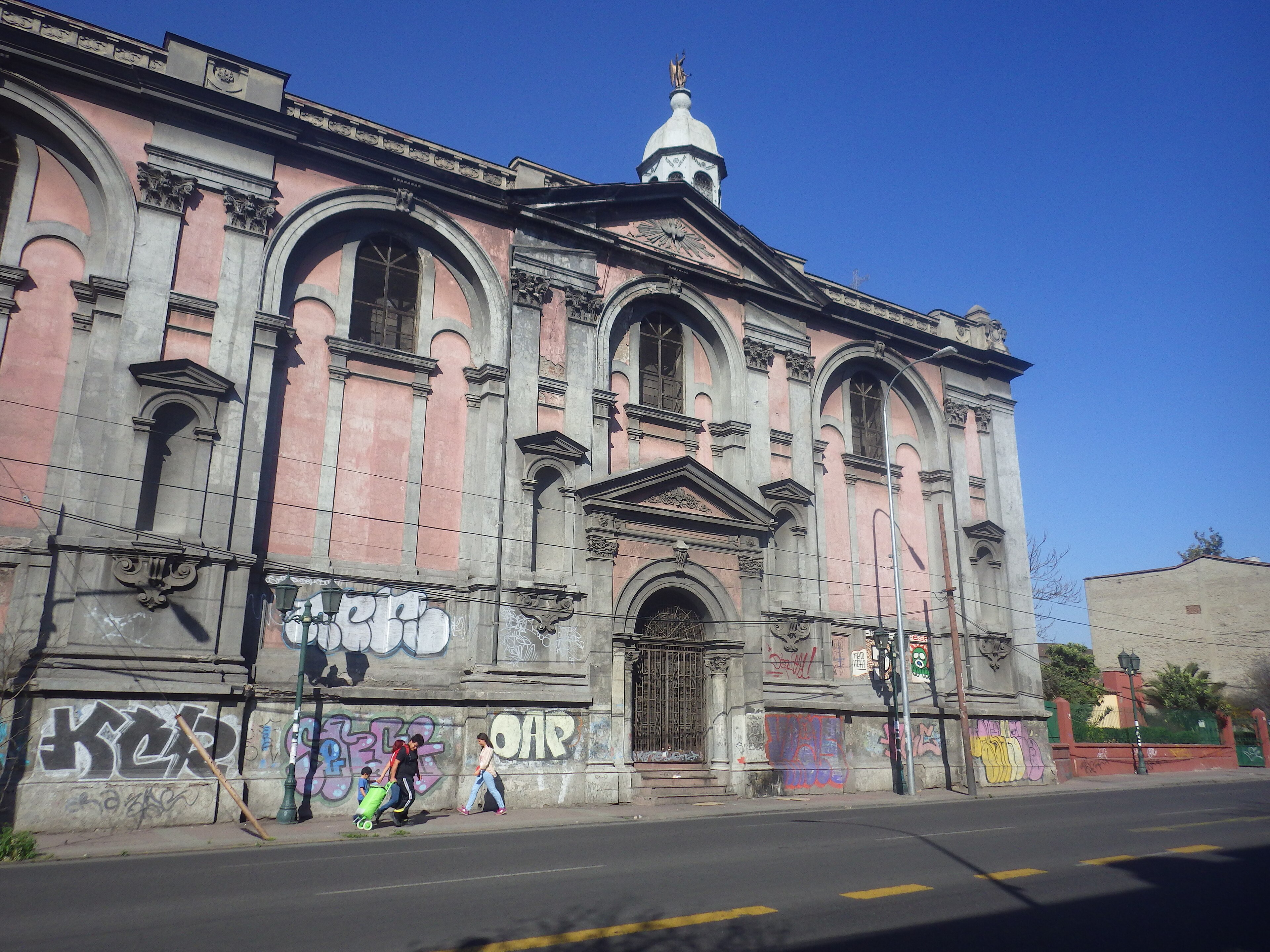
Yellow dashed centre line: Yellow centre dashes with white lane lines fit Chile and its Southern Cone neighbours.
Green ornate street lamps: Dark green heritage lamp posts are common in Santiago's old central neighbourhoods.
Dry sun, palms, heavy graffiti: Deep blue dry sky, palms and tagged colonial facades suggest central Chile's Mediterranean climate.
The first thing that jumps out is the sky: a hard, dry, cloudless blue that rules out humid tropical capitals and fog-bound Lima. Then the road: yellow dashed centre line beside white lane lines, which narrows things to the Southern Cone. The building is a grand but crumbling neoclassical church in pink plaster, smothered in graffiti, sitting on a street of otherwise low buildings with a wooden utility pole and green heritage lamps. That mix of faded European grandeur, low skyline and heavy tagging is classic central Santiago. A habit worth keeping for Chile: palms plus bare deciduous trees under a dry sky signal its Mediterranean middle, while lush green forests point south.
Easily confused with
Lima, Peru: Lima's sky is almost always grey and hazy, never this deep blue.
Buenos Aires, Argentina: Buenos Aires streets are lined with tall apartment blocks; old Santiago stays low.
Remember: Yellow centre line, dry blue sky, low colonial city: think Santiago.
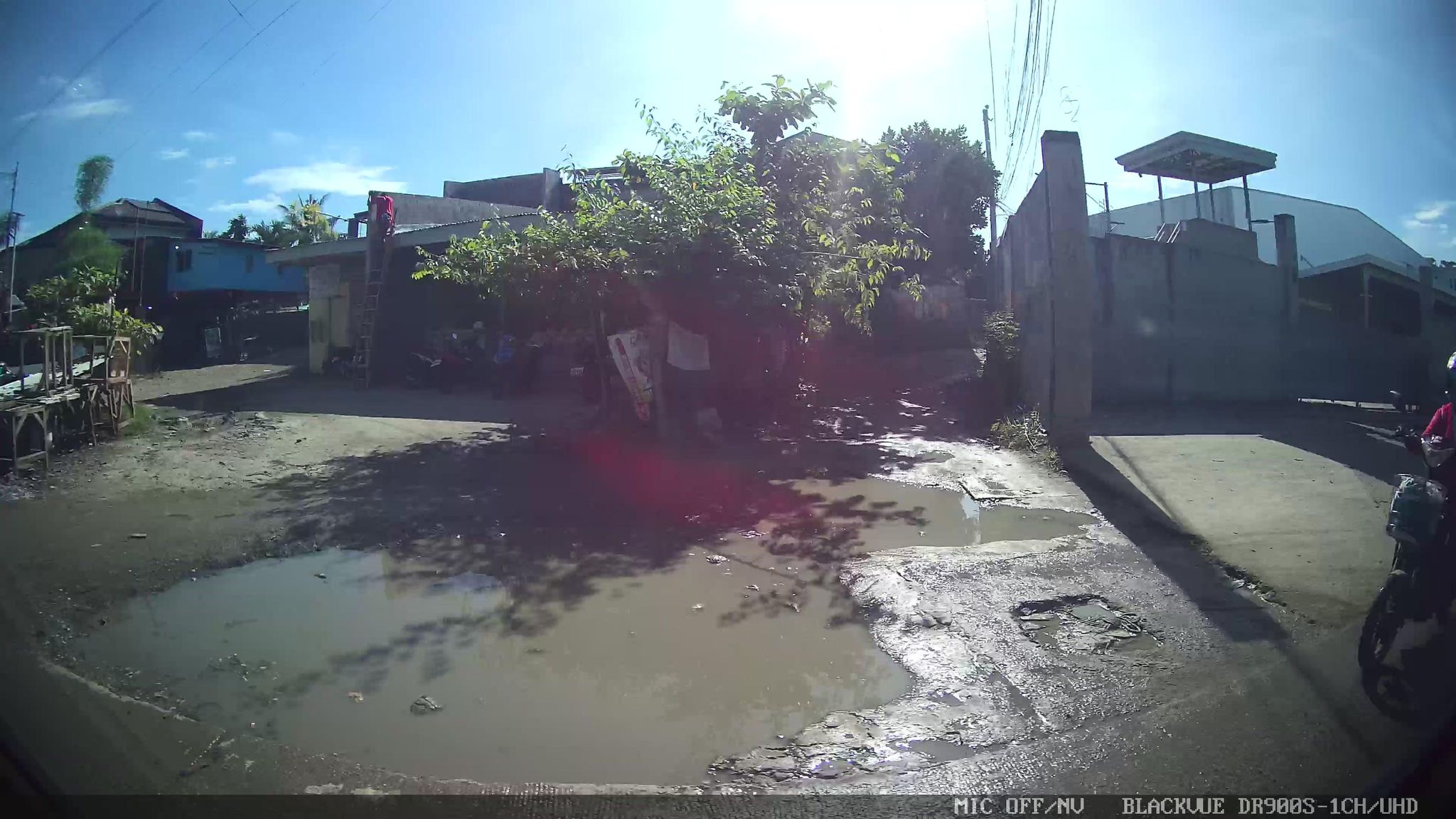
Concrete slab road: Cracked poured-concrete road surfaces are typical of Philippine barangay (village) streets.
Grey hollow-block walls: Unpainted cement-block perimeter walls with tall pillars are a classic Philippine building style.
Tangled wires, coconut palms: Messy overhead cables and coconut palms point to tropical Southeast Asia.
The first thing that jumps out is the heat and light: coconut palms, lush trees and a hard tropical sun, so you're somewhere in Southeast Asia or the Pacific. Then look down. The road is poured concrete, cracked and potholed, which is far more common in the Philippines than in Indonesia, Malaysia or Thailand, where asphalt dominates. The grey hollow-block walls with tall square pillars and the corrugated metal roofs back that up, as does the weathered wooden house raised on posts. A carry-over tip: the Philippines drives on the right, unlike most neighbours, and its side streets are full of motorbikes and messy bundles of overhead wires on concrete poles.
Easily confused with
Indonesia: Indonesia drives on the left; the Philippines drives on the right.
Malaysia: Malaysian roads are usually tidy asphalt, rarely cracked concrete slabs.
Remember: Cracked concrete roads plus grey block walls in the tropics: think Philippines.
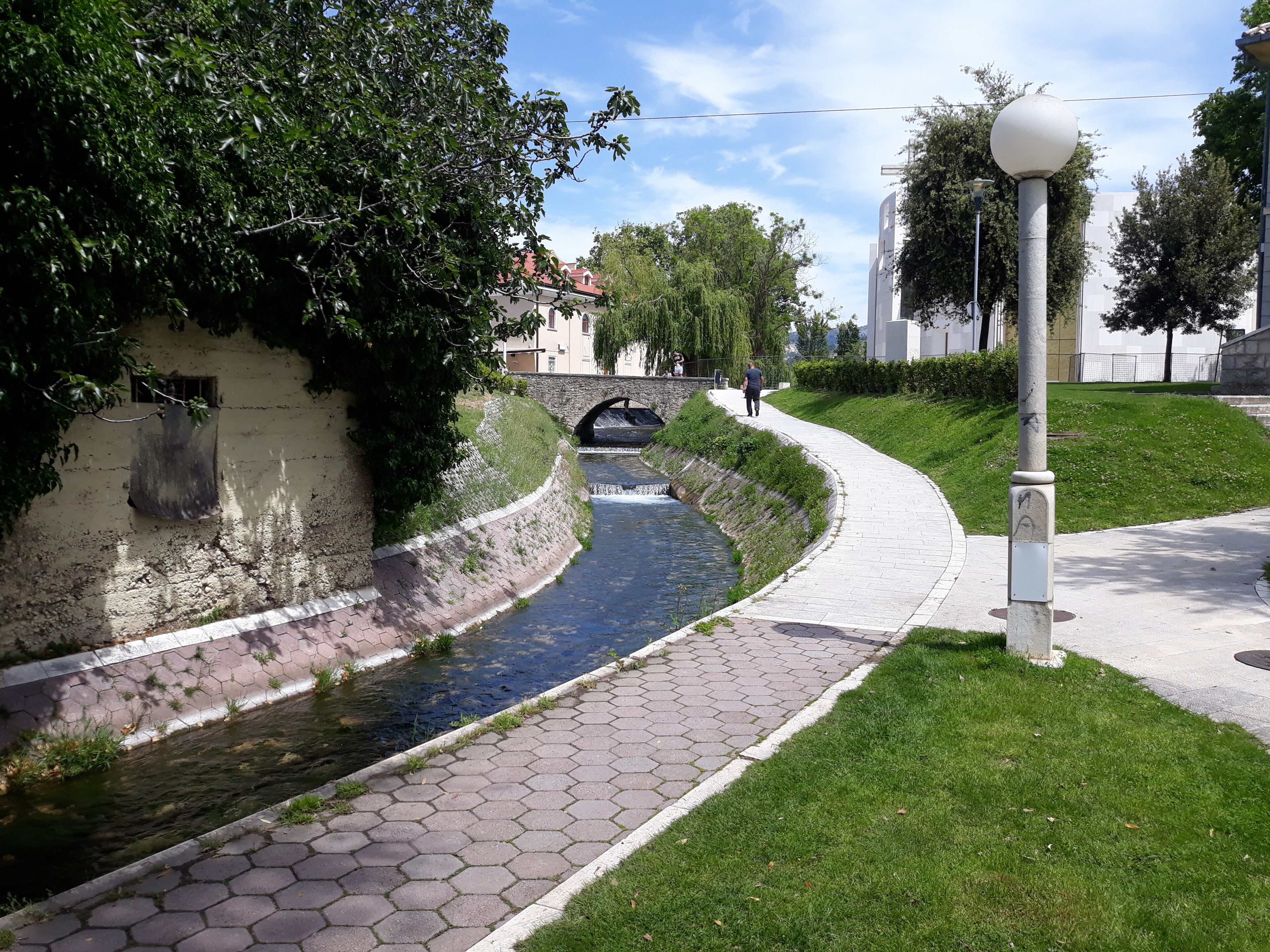
White limestone lamp post: Pale carved limestone street furniture and paving is typical of Dalmatian towns.
Rubble-stone arch bridge: Rough grey stone bridges and red tile roofs point to the Adriatic hinterland.
Mediterranean trees, karst hills: Holm oaks beside willows, with rocky hills behind, suggest inland Dalmatia, not the coast.
The first thing that jumps out is how much pale stone there is: the lamp post, the path edging, the bridge, even the old wall all look cut from the same grey-white rock. That kind of limestone is the signature of the Dinaric karst, the bare rocky hills running down the Adriatic. Willows and a fresh stream rule out the dry coastal strip, so this feels like an inland valley town rather than a seaside one. Red tile roofs and a stark modern church fit Croatia well. A habit worth carrying to other rounds: in Croatia, look past the town to the hills; scrubby grey slopes with exposed rock almost always mean Dalmatia or nearby Herzegovina.
Easily confused with
Central Italy: Croatian signs use č, ć, š; Italian ones never do.
Herzegovina, Bosnia: Bosnian towns often show minarets or Cyrillic; Dalmatia rarely does.
Remember: Bright white limestone everywhere plus rocky hills means think Dalmatia first.
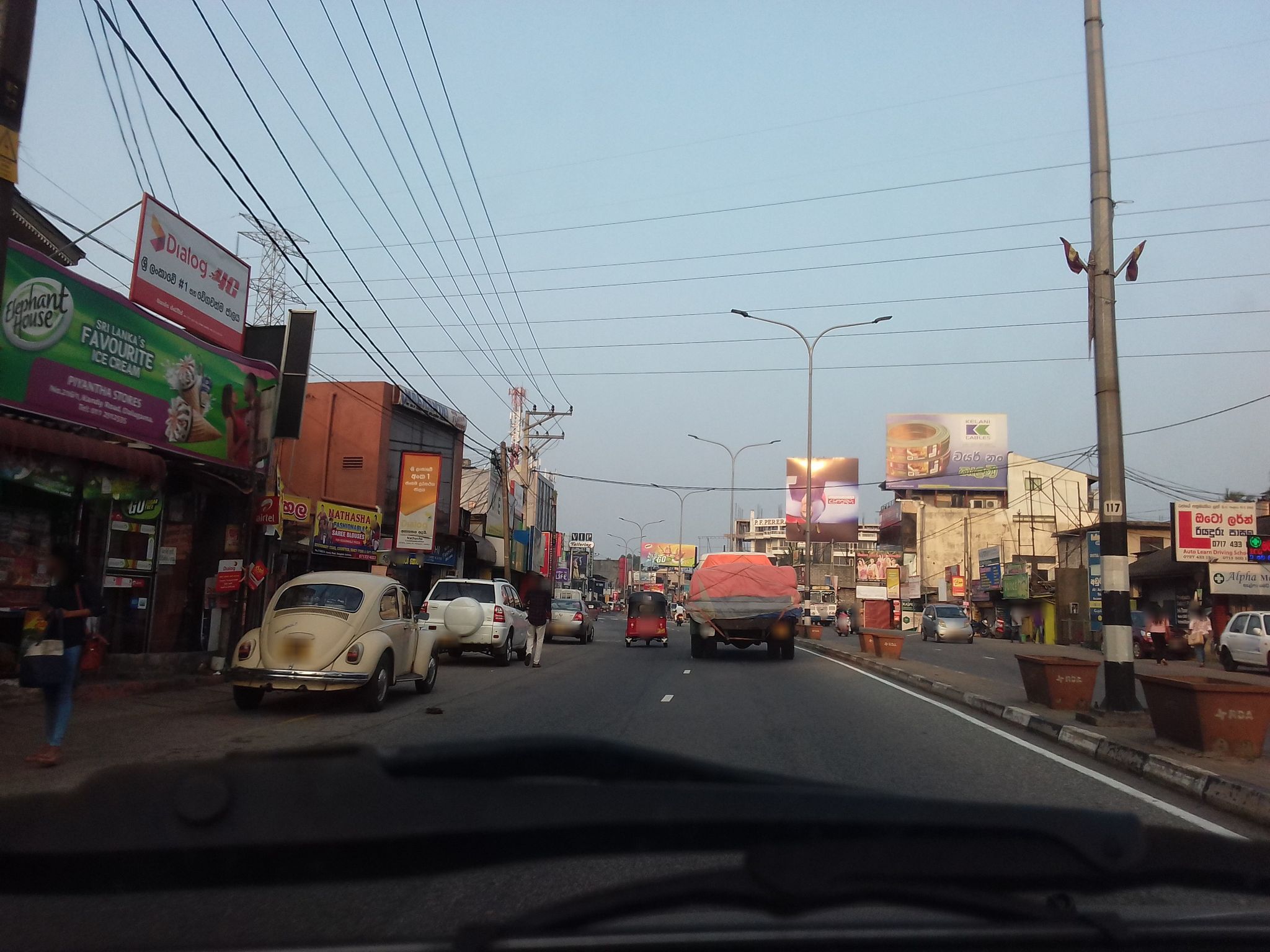
Round, loopy Sinhala script: Curly letters without a top bar are Sinhala, used only in Sri Lanka.
Dialog telecom billboard: Dialog is Sri Lanka's biggest mobile network; its red-orange signs are everywhere there.
Yellow rear plates, tuk-tuks: Left-side driving with yellow rear plates and red tuk-tuks fits Sri Lanka.
The first thing that jumps out is the lettering: soft, rounded loops with no flat line along the top, which instantly rules out India, Nepal and Bangladesh. Add left-side traffic, red three-wheelers and a yellow rear number plate on the old Beetle, and you're firmly in Sri Lanka. Dialog and Elephant House branding confirm it. The dense strip of shops, wide divided road and heavy overhead wiring suggest the busy belt around Colombo rather than the hill country, where roads are narrow and winding. A handy carry-over: Sri Lankan rear plates are yellow and front plates white, and Sinhala dominates signs everywhere except the Tamil-speaking north and east.
Easily confused with
India: Hindi letters hang from a flat top line; Sinhala letters are round loops.
Bangladesh: Bengali script has a top bar; Sri Lanka shows Sinhala curls.
Remember: Round, bubbly script with no top line means Sri Lanka.
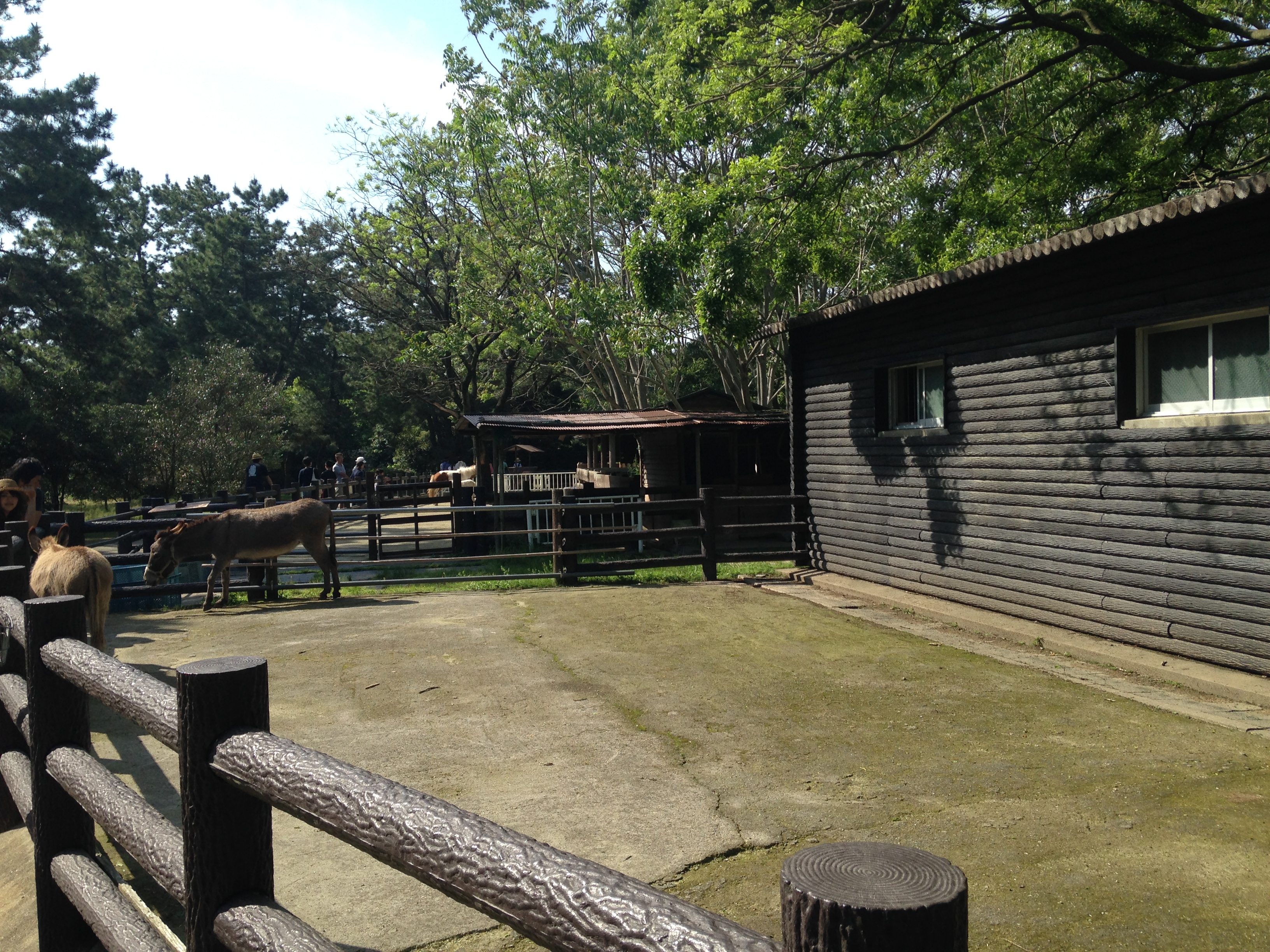
Fake-wood concrete fence: Concrete rails moulded to look like logs are a classic Japanese park feature.
Coastal black pines: Dark, twisted pines like these line Japan's coasts and parks.
Moulded log-style wall: Fake log siding with aluminium sliding windows fits Japanese park buildings.
The fence grabs attention immediately: those rails aren't timber at all but concrete cast with fake bark and tree rings on the post tops. Japan loves this faux-wood style, called gijiboku, in parks, riverbanks and zoos, and spotting it is often enough to settle a country. Behind, the dark umbrella-shaped pines are typical of Japan's coastal parks, and the leafy deciduous trees suggest a warm, humid summer rather than the tropics, which pushes away Taiwan or Southeast Asia. Sun hats and a tidy, mossy concrete yard fit a family day out in a Japanese public park. Carry this forward: whenever a guardrail, bench or fence looks oddly like a log but too perfect, Japan should be your first guess.
Easily confused with
South Korea: Korean parks use faux wood less; look for Hangul signs or bright painted roofs.
Taiwan: Taiwan shows more tropical palms and banyans than tidy pines.
Remember: Concrete made to look like logs means think Japan first.
 dropzone
 12