 dropzone
Dropzone #4 · 30 October 2026
Rio de Janeiro
 13
How to tell
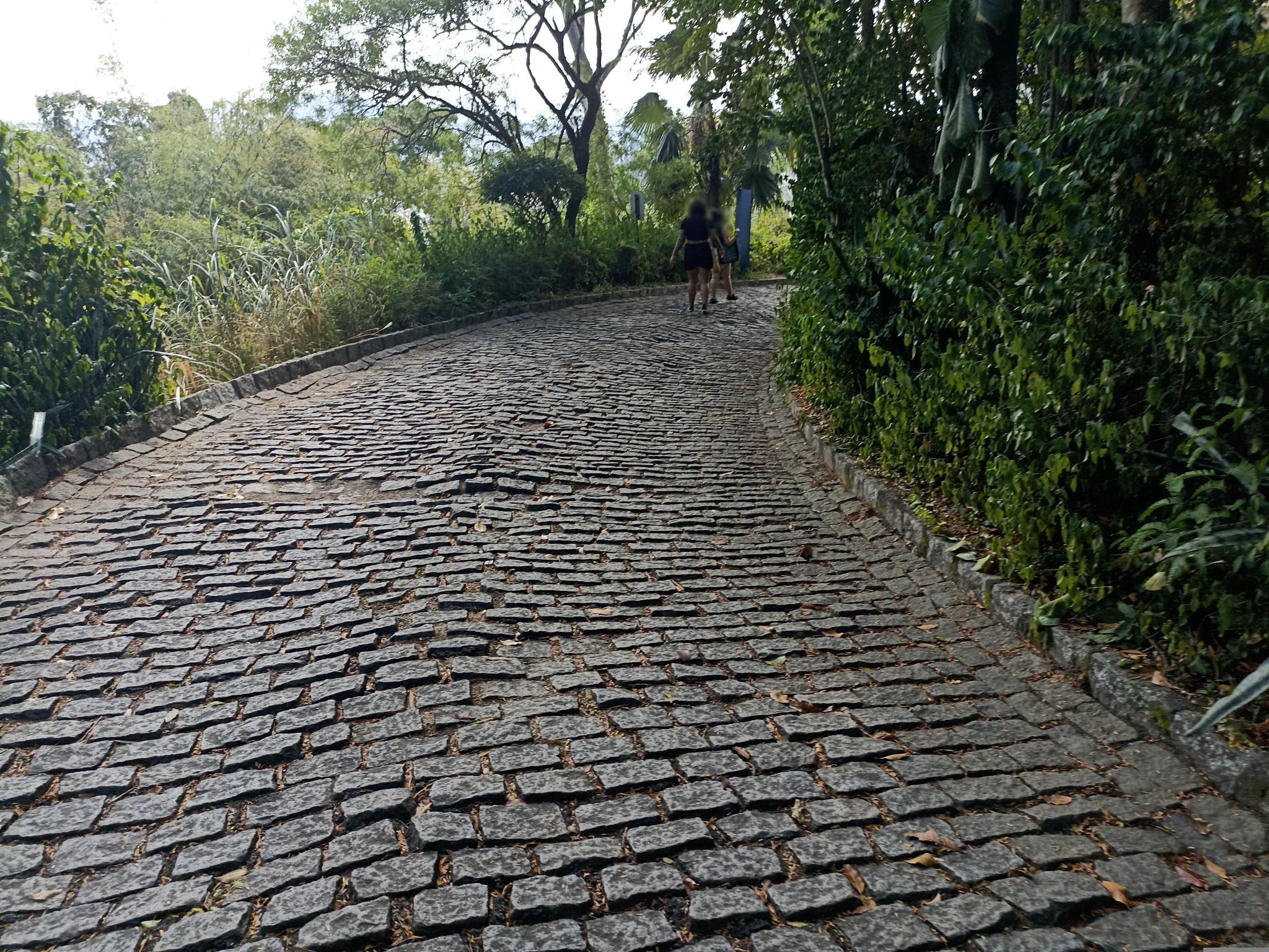
- Grey granite paving blocks: Rectangular granite blocks, called paralelepípedos, pave countless hillside streets across Brazil, especially Rio.
- Lush tropical greenery: Banana leaves, palms and dense bush point to humid tropical coastline.
- Granite kerb stones: Long speckled granite kerbs match Brazilian city roadwork.
The ground does most of the work here. Those dark speckled granite blocks, laid in rows with granite kerbs, are a Brazilian staple, especially on steep streets in Rio, São Paulo state and Minas Gerais. Then the plants: banana leaves, fan palms and tangled green bush say humid tropics, which knocks out Portugal despite the shared love of stone paving, since Portuguese towns tend toward small pale limestone mosaics. The steep hill with forest pressing in fits Rio's granite mountains crowding the city. A habit worth carrying: whenever a tropical road is paved with granite blocks rather than asphalt, Brazil should be your opening guess, then lean coastal southeast if the land is hilly.
Easily confused with
- Portugal: Portuguese paving is usually small white limestone; vegetation here is too tropical.
- Southeast Asia: Cut-granite cobbles are rare there; concrete or asphalt dominates.
Remember: Grey granite cobbles plus tropical jungle? Think southeast Brazil first.