 dropzone
Dropzone #11 · 6 November 2026
Split-Dalmatia County
 12

How to tell
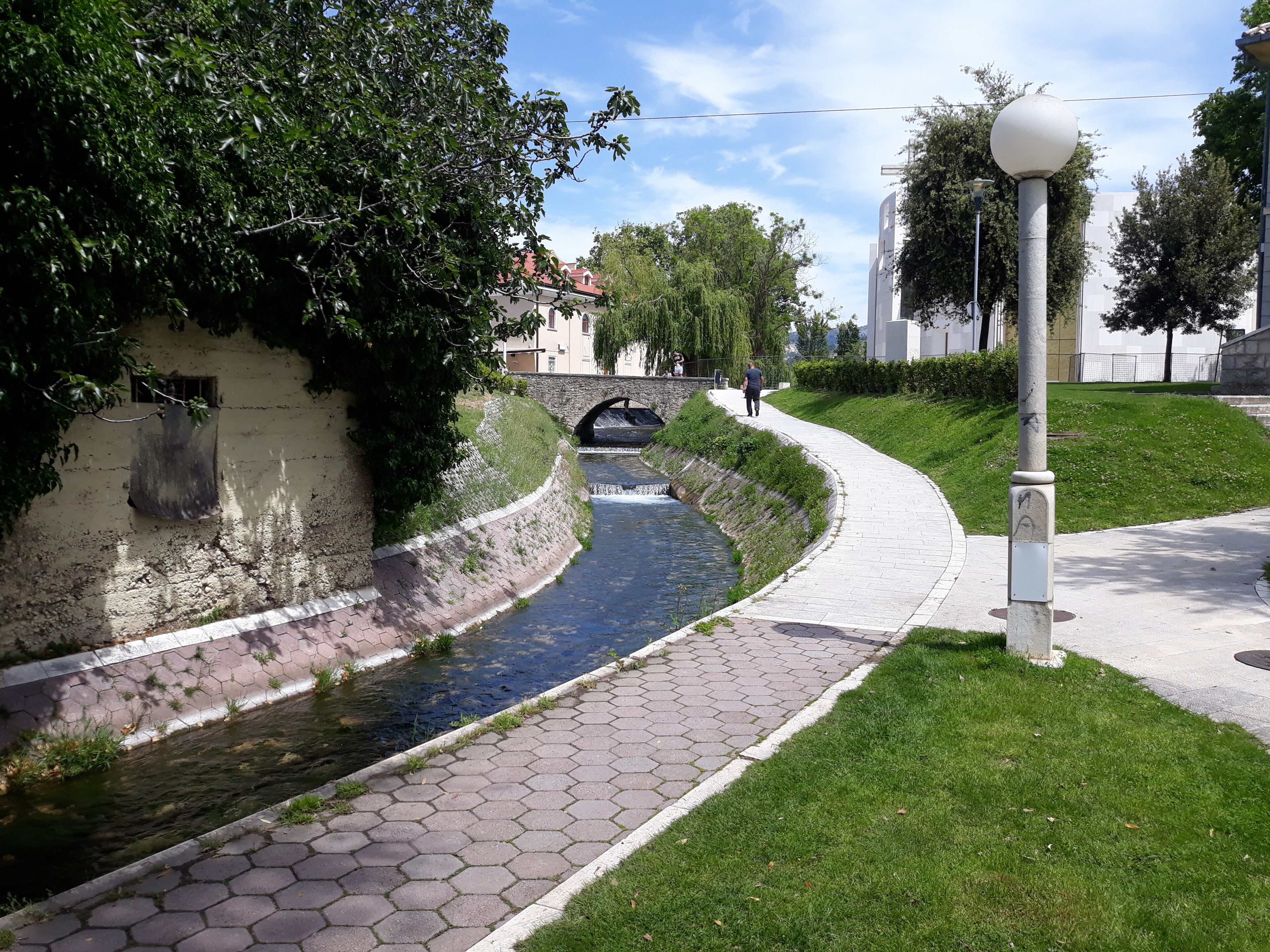
- White limestone lamp post: Pale carved limestone street furniture and paving is typical of Dalmatian towns.
- Rubble-stone arch bridge: Rough grey stone bridges and red tile roofs point to the Adriatic hinterland.
- Mediterranean trees, karst hills: Holm oaks beside willows, with rocky hills behind, suggest inland Dalmatia, not the coast.
The first thing that jumps out is how much pale stone there is: the lamp post, the path edging, the bridge, even the old wall all look cut from the same grey-white rock. That kind of limestone is the signature of the Dinaric karst, the bare rocky hills running down the Adriatic. Willows and a fresh stream rule out the dry coastal strip, so this feels like an inland valley town rather than a seaside one. Red tile roofs and a stark modern church fit Croatia well. A habit worth carrying to other rounds: in Croatia, look past the town to the hills; scrubby grey slopes with exposed rock almost always mean Dalmatia or nearby Herzegovina.
Easily confused with
- Central Italy: Croatian signs use č, ć, š; Italian ones never do.
- Herzegovina, Bosnia: Bosnian towns often show minarets or Cyrillic; Dalmatia rarely does.
Remember: Bright white limestone everywhere plus rocky hills means think Dalmatia first.