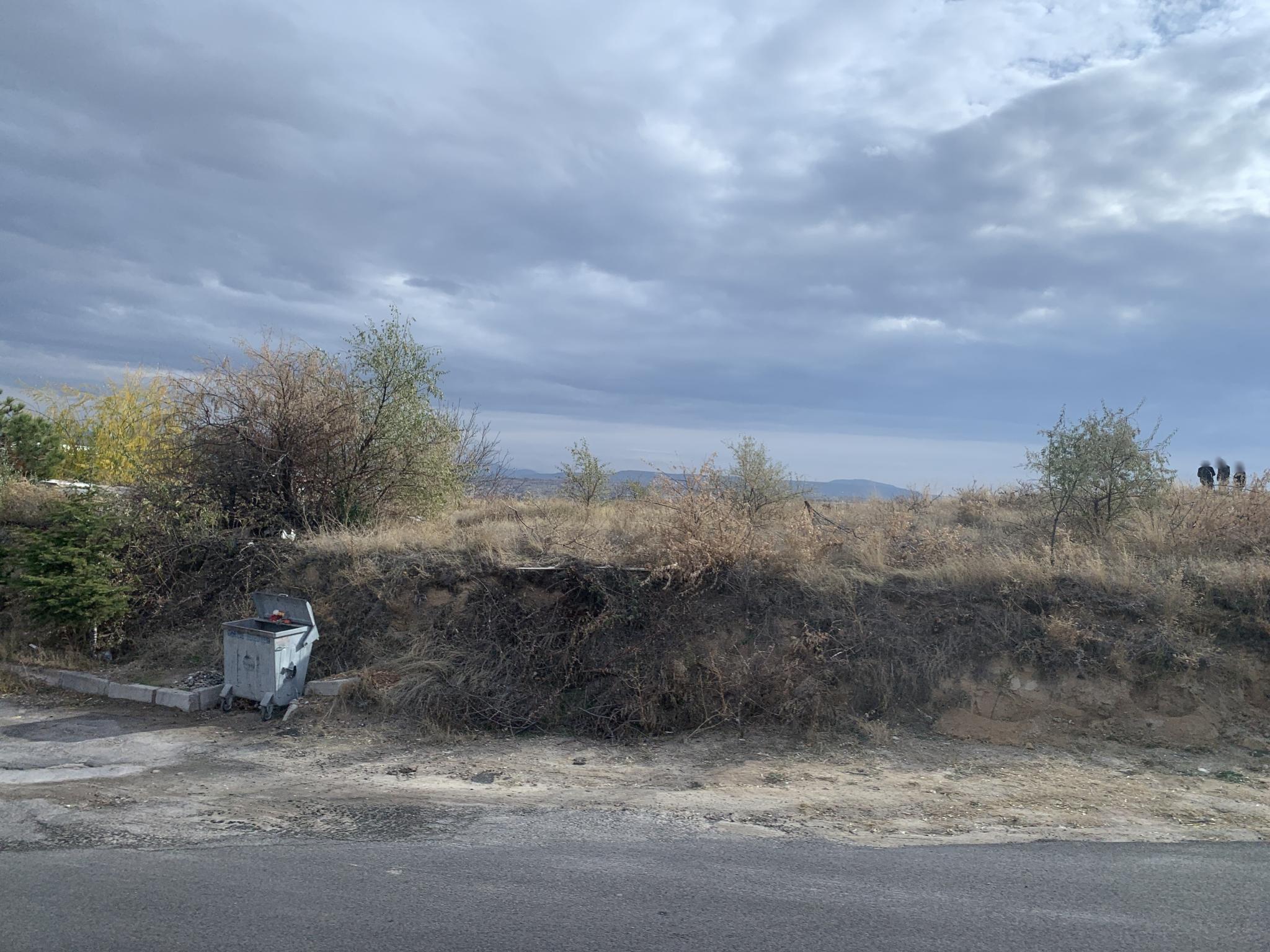
Galvanised wheeled bin: Grey steel municipal dumpsters on wheels are everywhere in Turkey.
Silvery-leaved oleaster shrubs: Russian olive, a grey-leaved shrub, is common along roads on the Anatolian plateau.
Dry steppe, bare hills: Treeless golden grassland with low distant ridges suggests high, dry inland plateau.
First thing that jumps out is the bare galvanised dumpster on wheels with its hinged lid. Turkey's municipalities put these on almost every rural roadside, while most of Western Europe has moved to coloured plastic. Then the landscape: golden dry grass, scattered grey-green oleaster shrubs, pale crumbly soil and low ridges far off. That is plateau steppe, not coast, which rules out the green Black Sea strip and the Mediterranean shore. Worn asphalt with a dusty, kerbless edge fits a small Anatolian town outskirt. Carry this forward: in Turkey, rubbish bins, plain concrete kerb blocks and that dry plateau look can place you in the centre even with no sign in sight.
Easily confused with
Central Spain: Spanish towns use green or yellow plastic bins, not bare steel.
Iran: Iran shows Persian script and usually rockier, starker mountains.
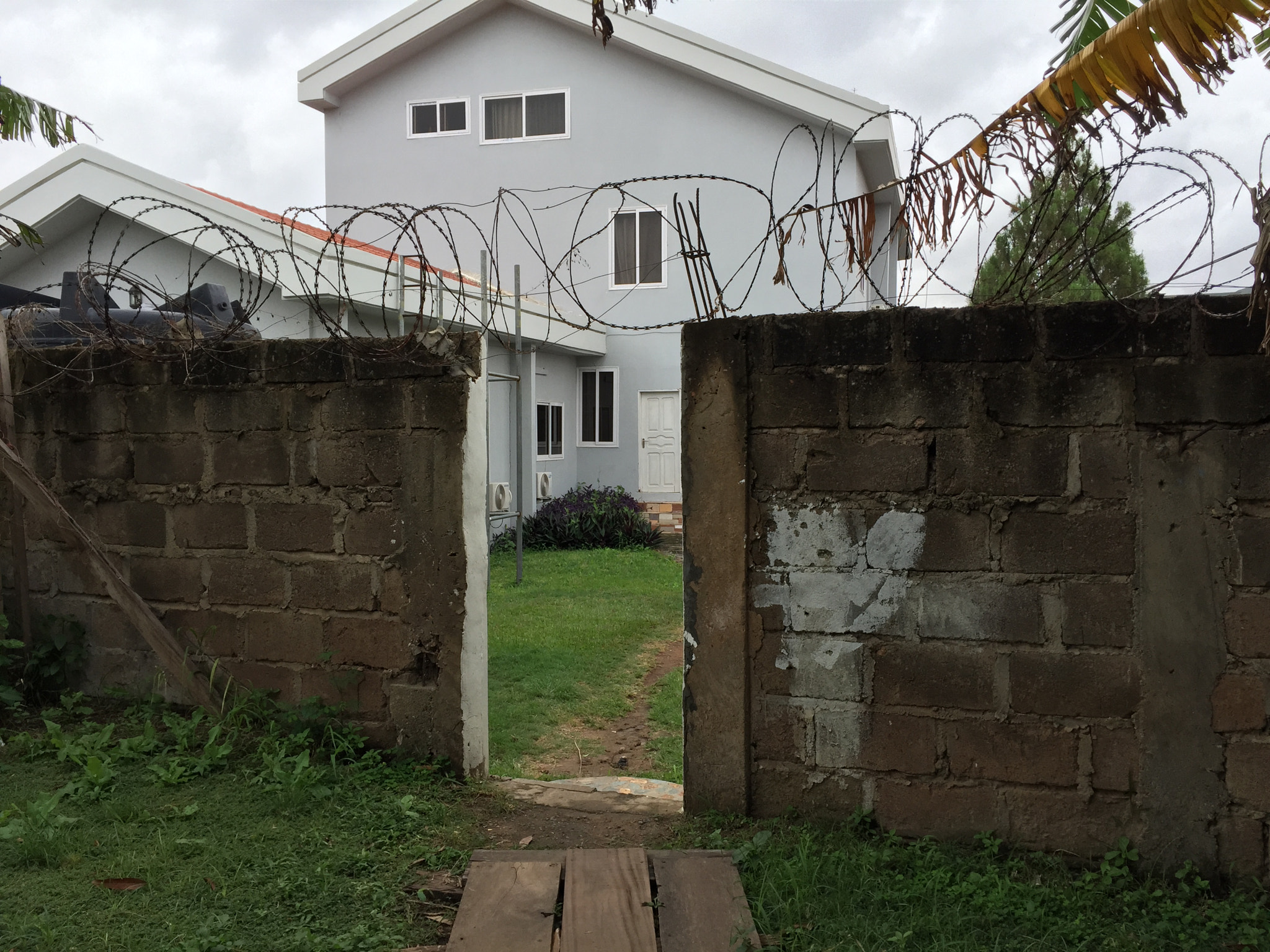
Block wall with razor wire: Bare cement-block compound walls topped with coiled wire are typical of West African cities.
Black rooftop water tank: Plastic water storage tanks point to unreliable mains water, common across West Africa.
Banana leaves, red soil: Banana plants and lush grass suggest a humid tropical coast.
The first thing that jumps out is the security setup: a rough cement-block wall crowned with coiled razor wire, guarding a freshly painted house with split air-conditioning units. That combination of a modest wall and a well-kept middle-class home screams a West African city suburb. The black plastic tank tucked behind the wall backs that up, since households store their own water. Banana leaves and green lawn under a grey sky rule out the Sahel and southern Africa. Without plates or signs you can't separate Ghana from Nigeria with certainty, but Accra is a sensible coastal pick. Carry this forward: across Ghana, walled compounds, water tanks and orange or red tile roofs appear constantly in Accra and Kumasi.
Easily confused with
Nigeria: Nigerian plates show green text; Ghana plates are plain white with black text.
Sierra Leone: Ghana's coast is drier and flatter, without Freetown's steep green hills.
Remember: Razor-wired block compound walls plus water tanks mean coastal West Africa.
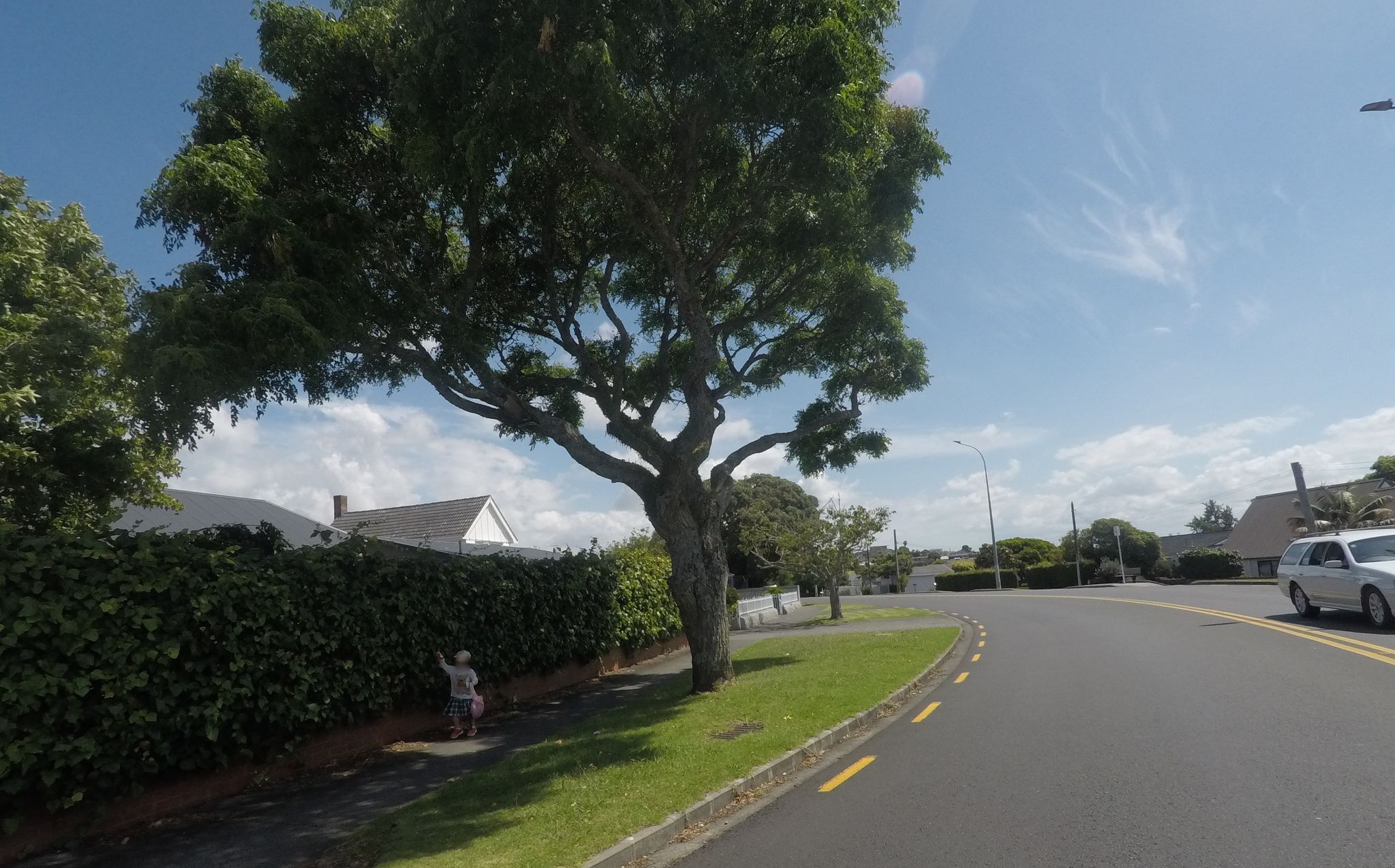
Yellow centre line: Double yellow no-passing centre lines are classic New Zealand; Australia uses white.
Broken yellow kerb line: Dashed yellow lines along the kerb mean no stopping in New Zealand.
Left-side driving, grass berm: Left-hand traffic and wide grass verges fit NZ suburbs.
The first thing that jumps out is yellow paint: a double yellow line down the middle of the bend and a dashed yellow line hugging the kerb. On a road where traffic keeps left, that combination is close to a giveaway for New Zealand, because Australia, the UK and most other left-driving countries paint their centre lines white. The rest backs it up: a wide mown grass strip between footpath and road, low single-storey houses with tiled or iron roofs, palms mixed with big leafy trees, and a wooden power pole. Carry this forward: in New Zealand, dashed yellow kerb lines mean no stopping and appear on almost every suburban bend.
Easily confused with
Australia: Australian centre lines are white; yellow centre lines point to NZ.
United Kingdom: UK uses solid yellow kerb lines and white centre lines.
Remember: Yellow centre lines on a left-driving road almost always mean New Zealand.
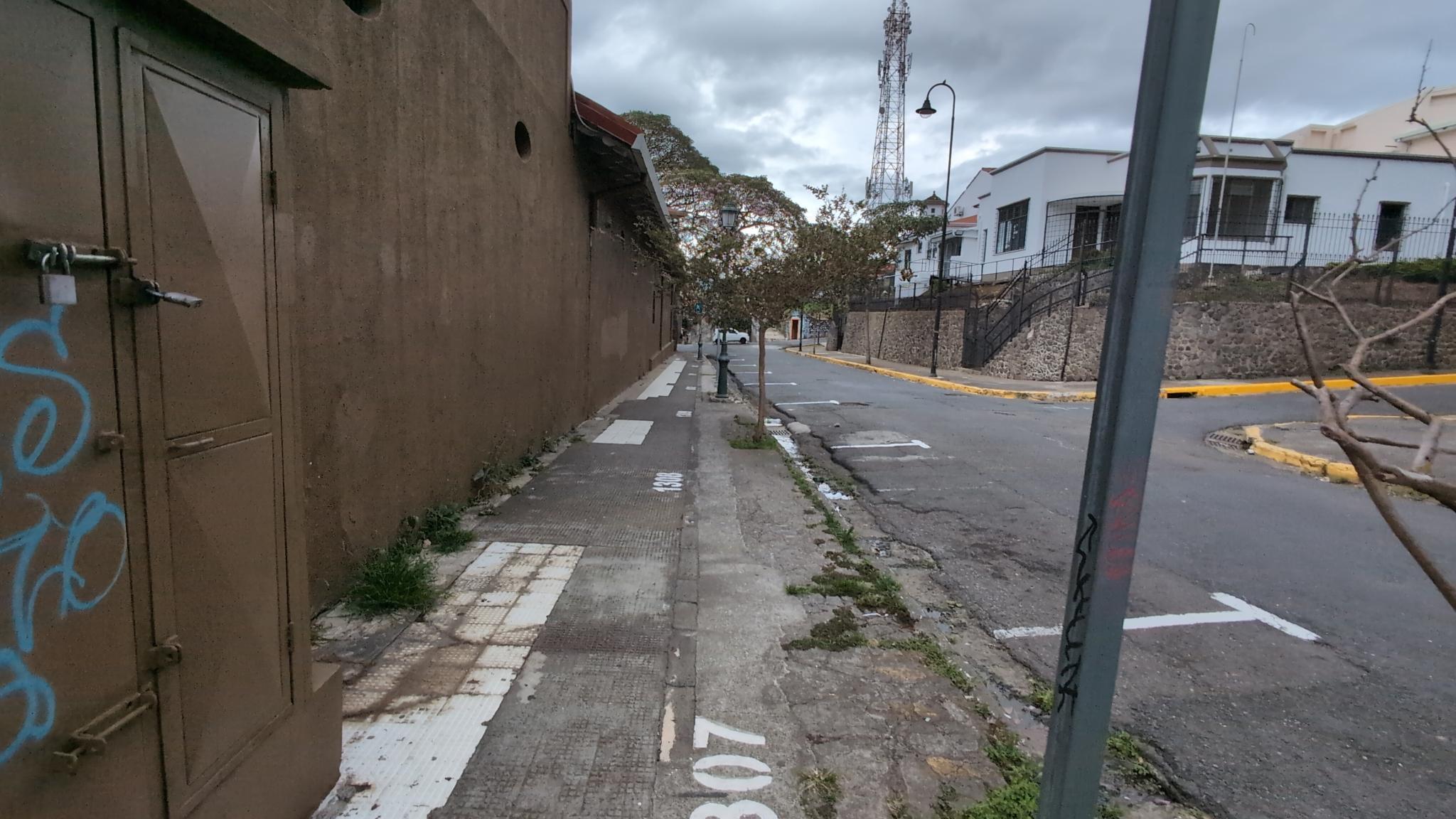
Yellow-painted curbs: Bright yellow curb paint at corners is very common in Costa Rican towns.
Numbered parking bays: White painted bay numbers like 1307 mark paid street parking, typical of San José.
Volcanic stone walls: Dark stone retaining walls and hilly streets suggest a highland Central American capital.
The first thing that jumps out is the bright yellow curb paint wrapping the corner, which is a strong Costa Rica habit. The street feels Latin American: barred windows, iron railings, flat-roofed white houses on a raised lot, and a cloudy, mild highland sky rather than coastal heat. Dark volcanic stone walls and the sloping street fit the Central Valley around San José. Numbered parking bays painted on the pavement point to a city centre with paid parking. Old-style green lamp posts suggest a historic district. Carry this forward: Costa Rica pairs yellow curbs with tidy concrete sidewalks and lush trees, and its capital sits on hills under frequent grey cloud.
Easily confused with
Guatemala City: Guatemala rarely paints curbs bright yellow; Costa Rica does constantly.
Mexico: Mexican curbs are often red or yellow-black stripes, not solid yellow.
Remember: Solid yellow curbs on hilly, tidy Latin streets often mean Costa Rica.
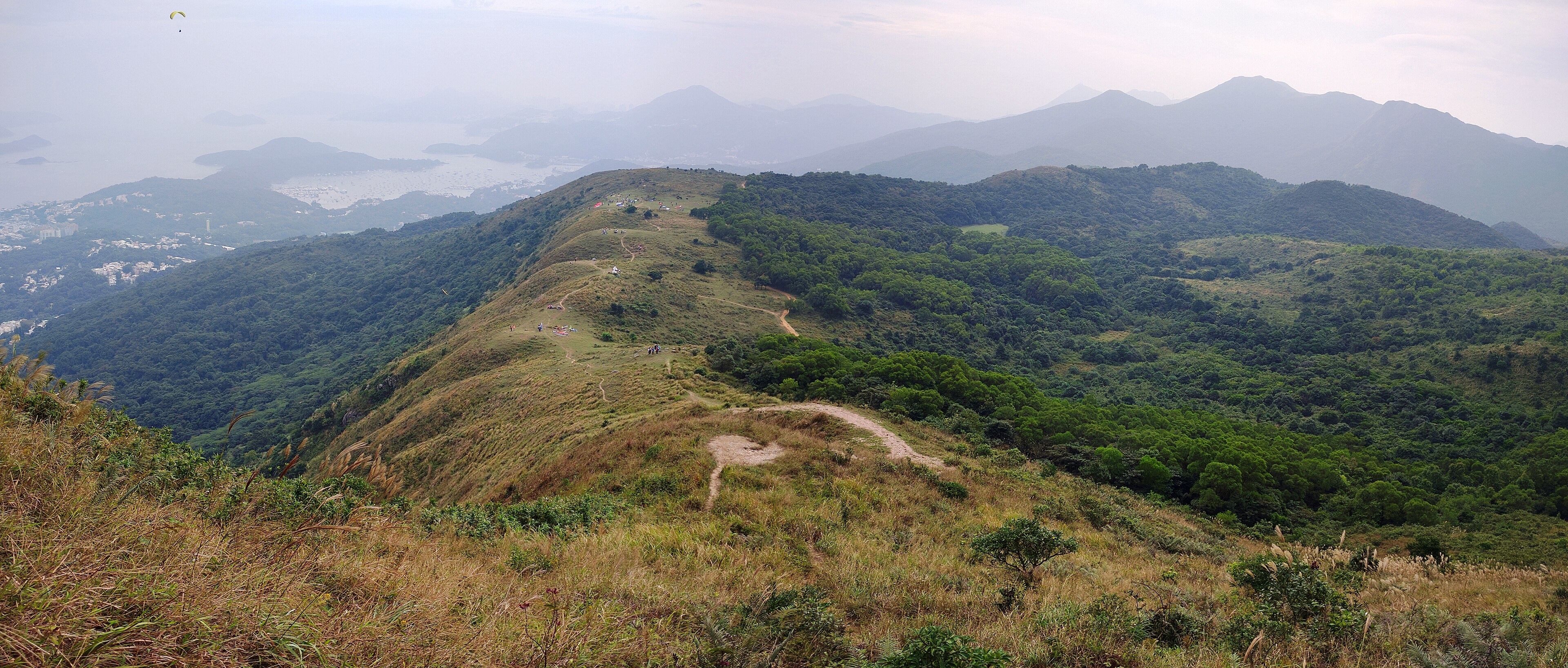
Island-studded bay with marina: Steep green islands in a hazy sheltered bay full of boats suggest Hong Kong's coast.
Tower blocks among hills: Dense apartment towers squeezed beside wild hillsides are typical of Hong Kong's New Territories.
Silvergrass and evergreen scrub: Feathery silvergrass and thick evergreen woodland point to humid subtropical southern China.
The haze and the bay full of small steep islands jump out first, followed by the boats packed into a marina. That combination of tidy harbours, wild grassy ridges and clusters of tall apartment blocks hugging the lowland is very Hong Kong. The vegetation is evergreen and lush, with feathery silvergrass on the ridge, which rules out temperate East Asia like Korea or most of Japan. Hong Kong is roughly three-quarters countryside, so many photos there show hiking trails and country parks rather than streets. Remember that its lowlands are crammed with high-rises while the hills stay untouched, and hazy horizons are common through much of the year.
Easily confused with
Northern Taiwan: Taiwan's coastal hills usually face open ocean, not crowded island bays.
Southern South Korea: Korean hills show pines, bare rock and browner deciduous trees.
Remember: Hazy green islands plus towers beside wild hills usually means Hong Kong.
 dropzone
 12