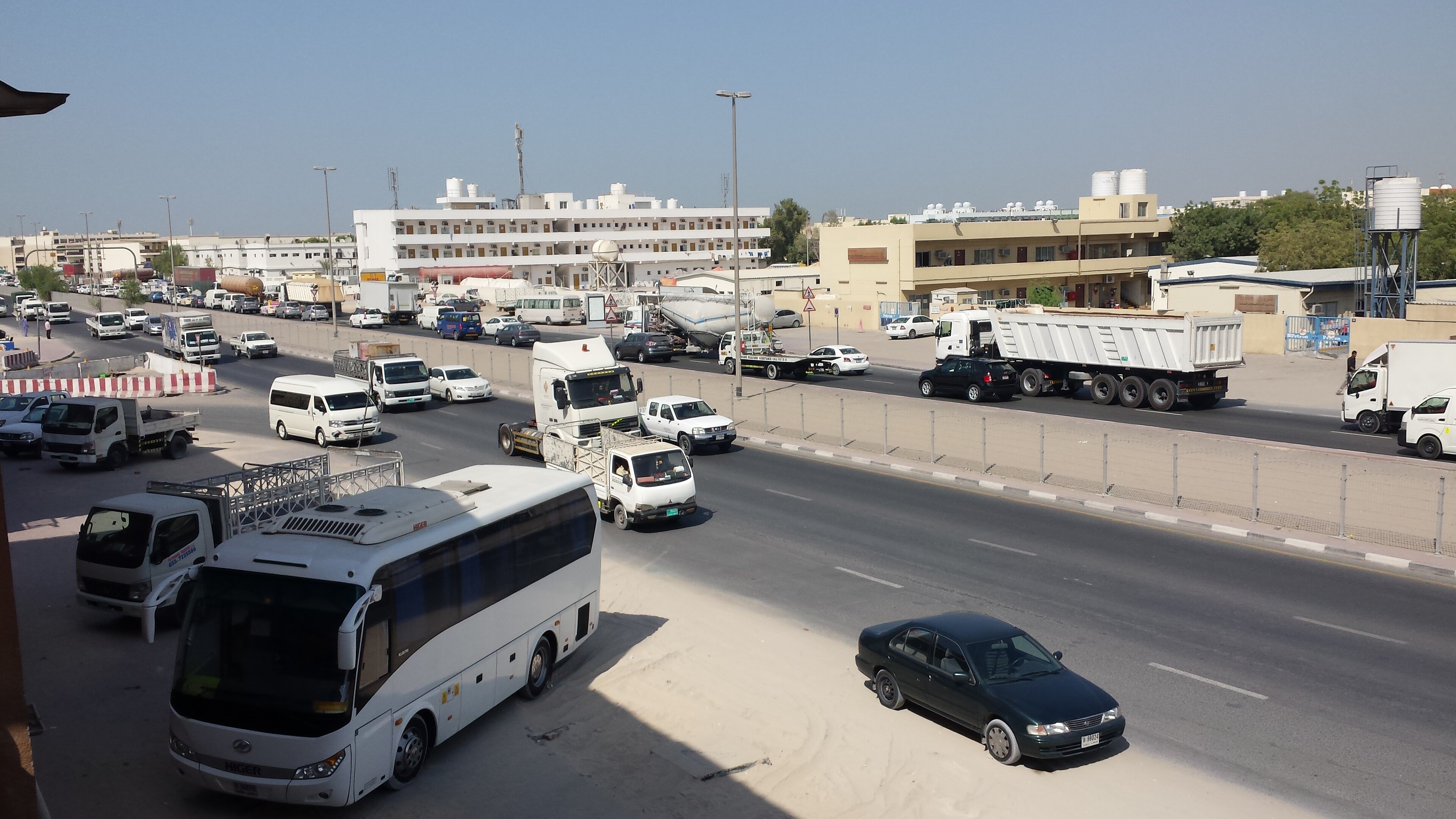
Short white Dubai plates: Small white plates with a letter and five digits, like 'B 98024', point to Dubai.
Black-white striped kerbs: Alternating black and white kerb stones are classic UAE road styling.
Rooftop water tanks, sand: White rooftop water tanks, sandy lots and labour-camp blocks mean the Arabian Gulf.
First thing that jumps out is the sand everywhere: blown onto the verge, filling empty lots, with a hazy pale sky above. That alone narrows things to the Arabian Peninsula. Then the buildings: plain white and beige two- and three-storey blocks crowned with clusters of plastic water tanks, typical of worker housing and industrial zones in the Gulf. Traffic drives on the right and is dominated by white pickups, Toyota vans and Japanese light trucks. The clincher is the plate on the dark Nissan, a short white plate with a single letter and five digits, which is Dubai's format. Black-and-white striped kerbs are another UAE habit worth remembering, since they appear along almost every road in the country.
Easily confused with
Saudi Arabia: Saudi plates are wider with Arabic and Latin letters split in halves.
Qatar: Qatari plates show only numbers and a maroon band, no letter code.
Remember: Letter plus digits on a short white plate means Dubai.
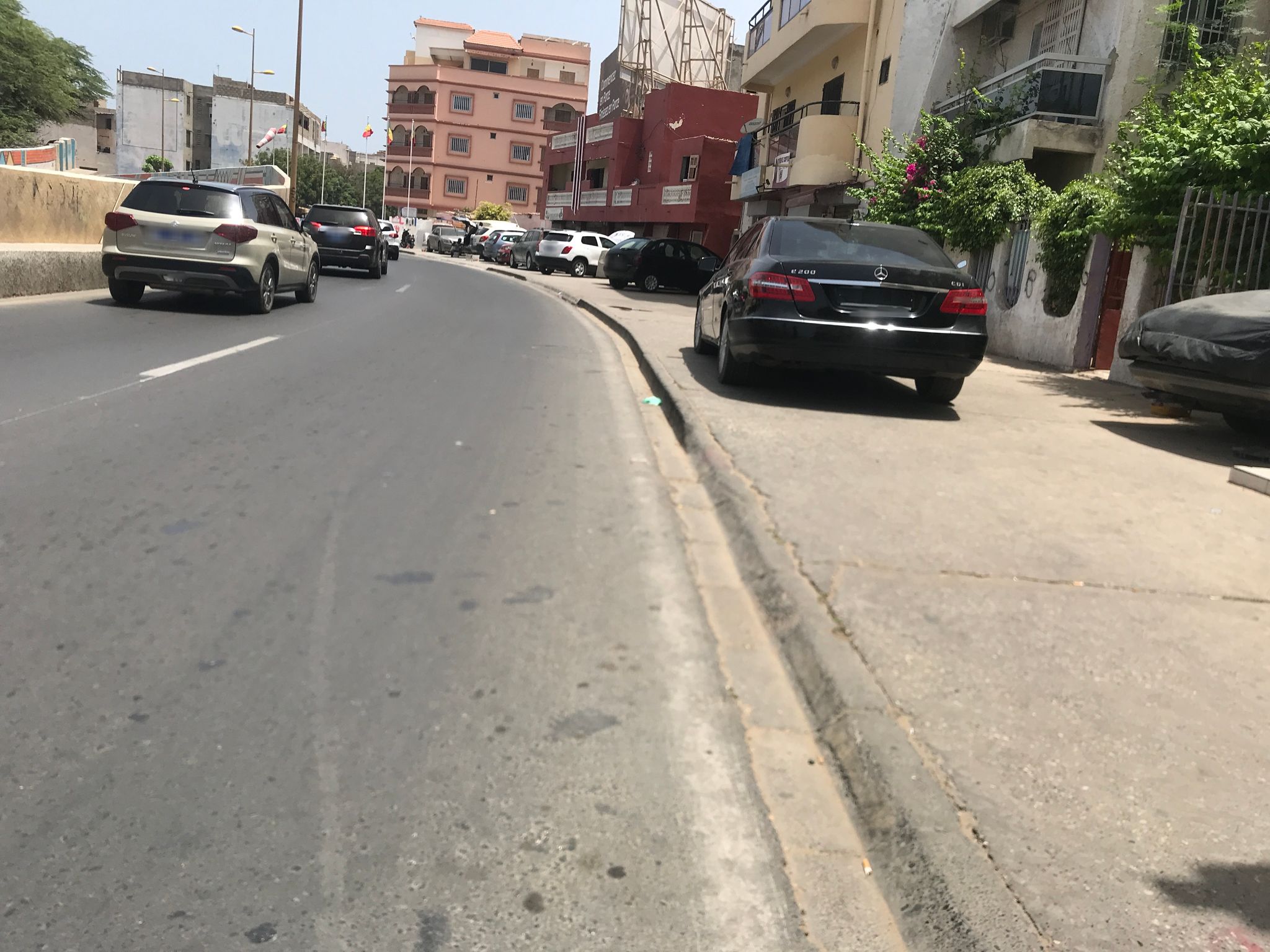
Green-yellow-red flags: Vertical green-yellow-red flags with a green star mean Senegal.
Pastel concrete apartment blocks: Flat-roofed, pastel-painted blocks with barred windows suggest urban coastal West Africa.
Sandy dust, right-hand traffic: Pale sand everywhere, not red earth, and right-hand driving fit dry Sahel coast.
The tiny flags on the poles in the middle are the jackpot: green, yellow and red vertical stripes with a small green star are Senegal, while Mali uses the same colours without the star. Before spotting them, the pale sandy dust on every surface, flat-roofed concrete blocks in pink and cream, and cars driving on the right already point to dry, French-influenced West Africa rather than East Africa or the Maghreb. The mix of newish SUVs and an older Mercedes on a busy multi-lane road suggests a big city, and in Senegal that usually means Dakar. Carry this forward: sand-coloured soil plus pastel apartment blocks is very typical of the Dakar peninsula.
Easily confused with
Bamako, Mali: Mali's flag has no star, and its dust is redder.
Nouakchott, Mauritania: Mauritania's flag is green with a crescent, plus Arabic signs.
Remember: Green-yellow-red flag with a star and pale sand: think Senegal.
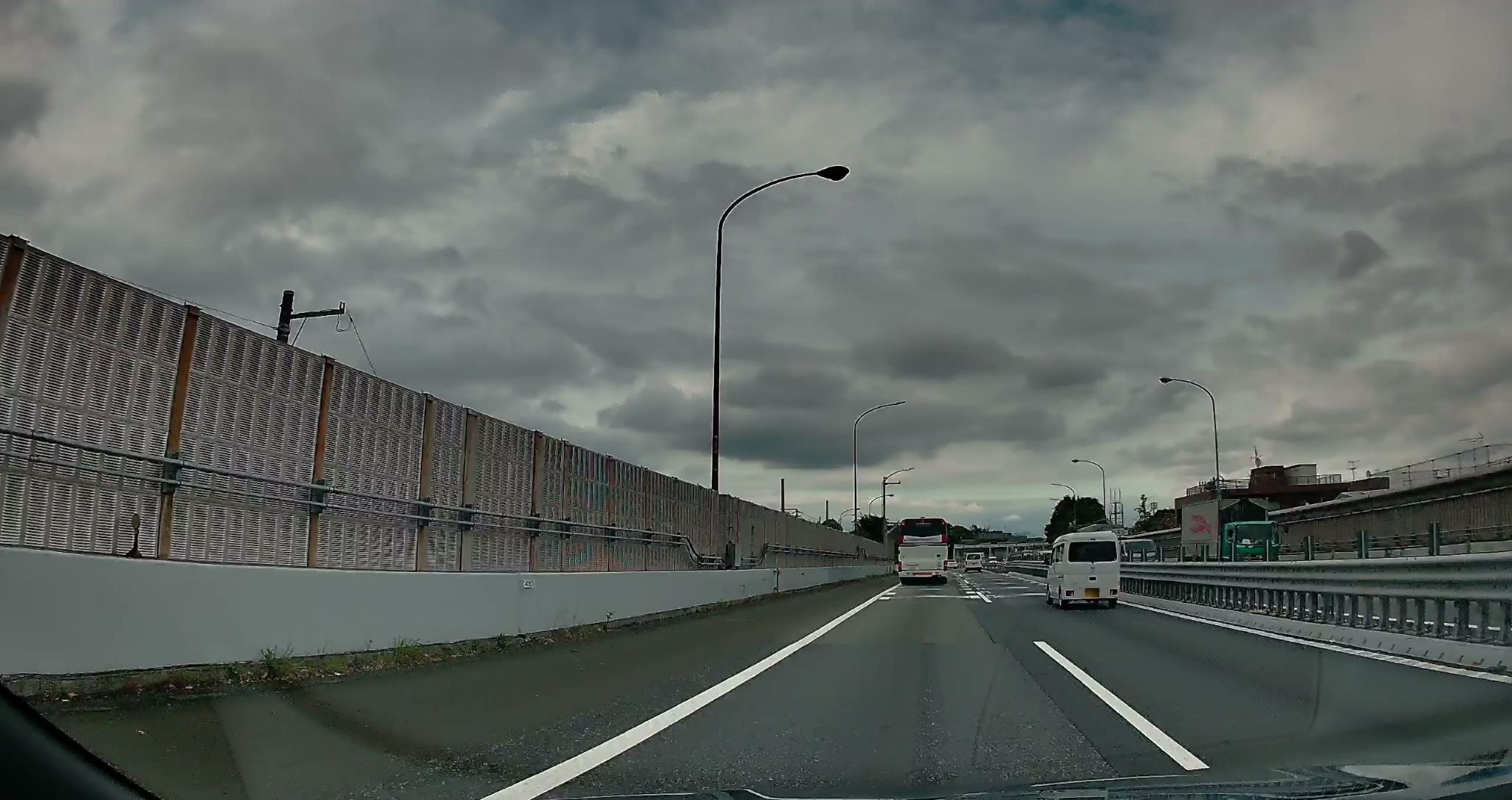
Kei van, yellow plate: Tiny boxy white van with a yellow number plate is a Japanese kei (small-engine) vehicle.
Tall perforated noise walls: Panelled sound barriers lining an elevated expressway are typical of Japanese urban highways.
Left-side driving: Traffic keeps left, narrowing it to Japan, UK, Australia or similar countries.
The first thing worth checking is which side traffic flows: everyone keeps left, which immediately removes Korea, Taiwan and China, the usual East Asian lookalikes. Then the little white van ahead is the giveaway, a tall, square kei van, a class of tiny vehicles Japan taxes lightly, with a yellow plate marking that class. The long perforated sound walls, crash barriers bolted on concrete, and slim curved streetlights all fit Japan's urban expressways. Even the rooftops beyond the barrier, with antennas and flat tops, look suburban Japanese. A habit to carry elsewhere: in Japan, scan for vehicle shapes and plate colours first, since kei cars appear in almost every road photo.
Easily confused with
South Korea: Korea drives on the right; Japan drives on the left.
Taiwan: Taiwan drives right and lacks boxy kei vans with yellow plates.
Remember: Boxy kei vans with yellow plates on the left mean Japan.
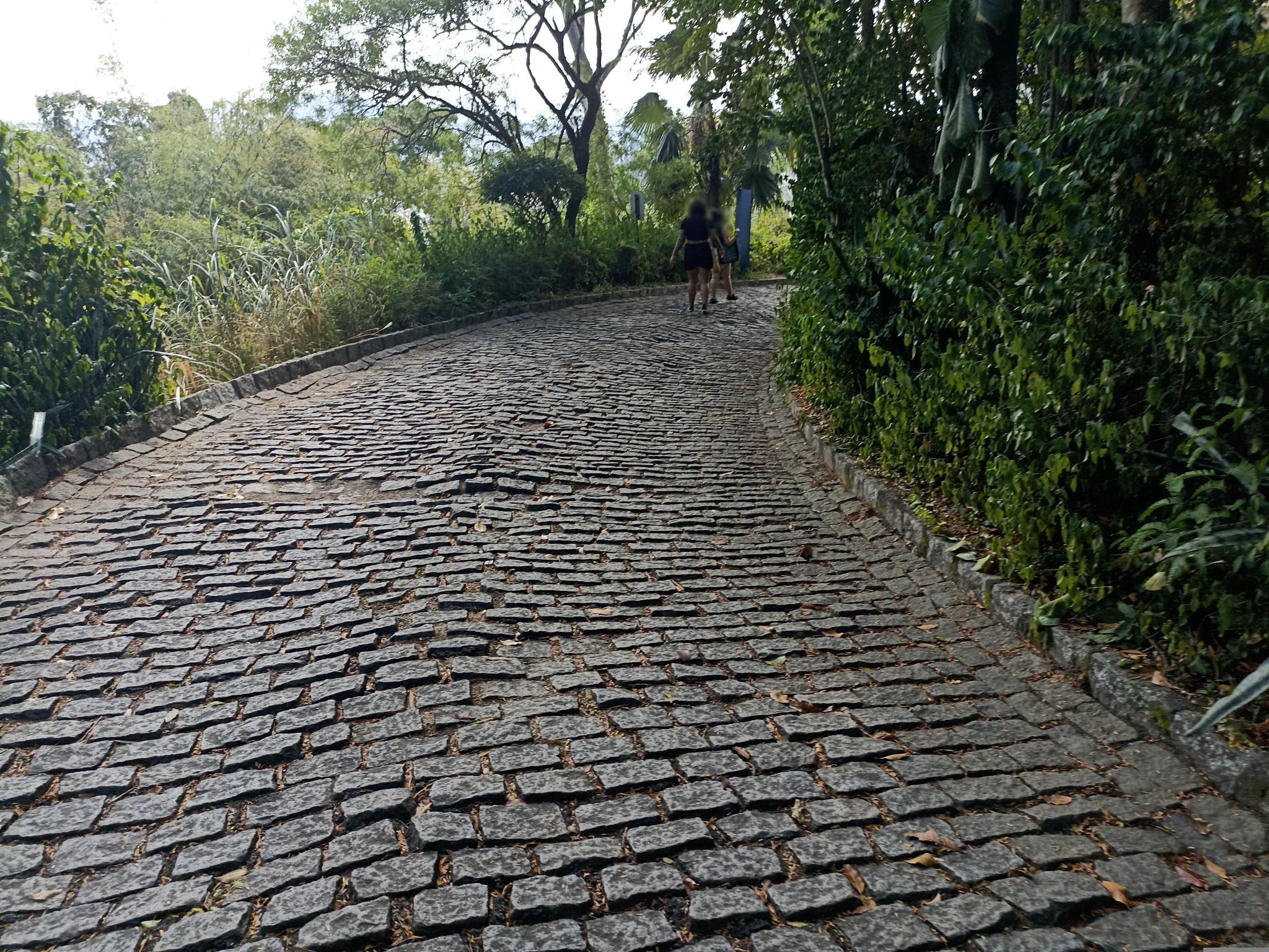
Grey granite paving blocks: Rectangular granite blocks, called paralelepípedos, pave countless hillside streets across Brazil, especially Rio.
Lush tropical greenery: Banana leaves, palms and dense bush point to humid tropical coastline.
Granite kerb stones: Long speckled granite kerbs match Brazilian city roadwork.
The ground does most of the work here. Those dark speckled granite blocks, laid in rows with granite kerbs, are a Brazilian staple, especially on steep streets in Rio, São Paulo state and Minas Gerais. Then the plants: banana leaves, fan palms and tangled green bush say humid tropics, which knocks out Portugal despite the shared love of stone paving, since Portuguese towns tend toward small pale limestone mosaics. The steep hill with forest pressing in fits Rio's granite mountains crowding the city. A habit worth carrying: whenever a tropical road is paved with granite blocks rather than asphalt, Brazil should be your opening guess, then lean coastal southeast if the land is hilly.
Easily confused with
Portugal: Portuguese paving is usually small white limestone; vegetation here is too tropical.
Southeast Asia: Cut-granite cobbles are rare there; concrete or asphalt dominates.
Remember: Grey granite cobbles plus tropical jungle? Think southeast Brazil first.
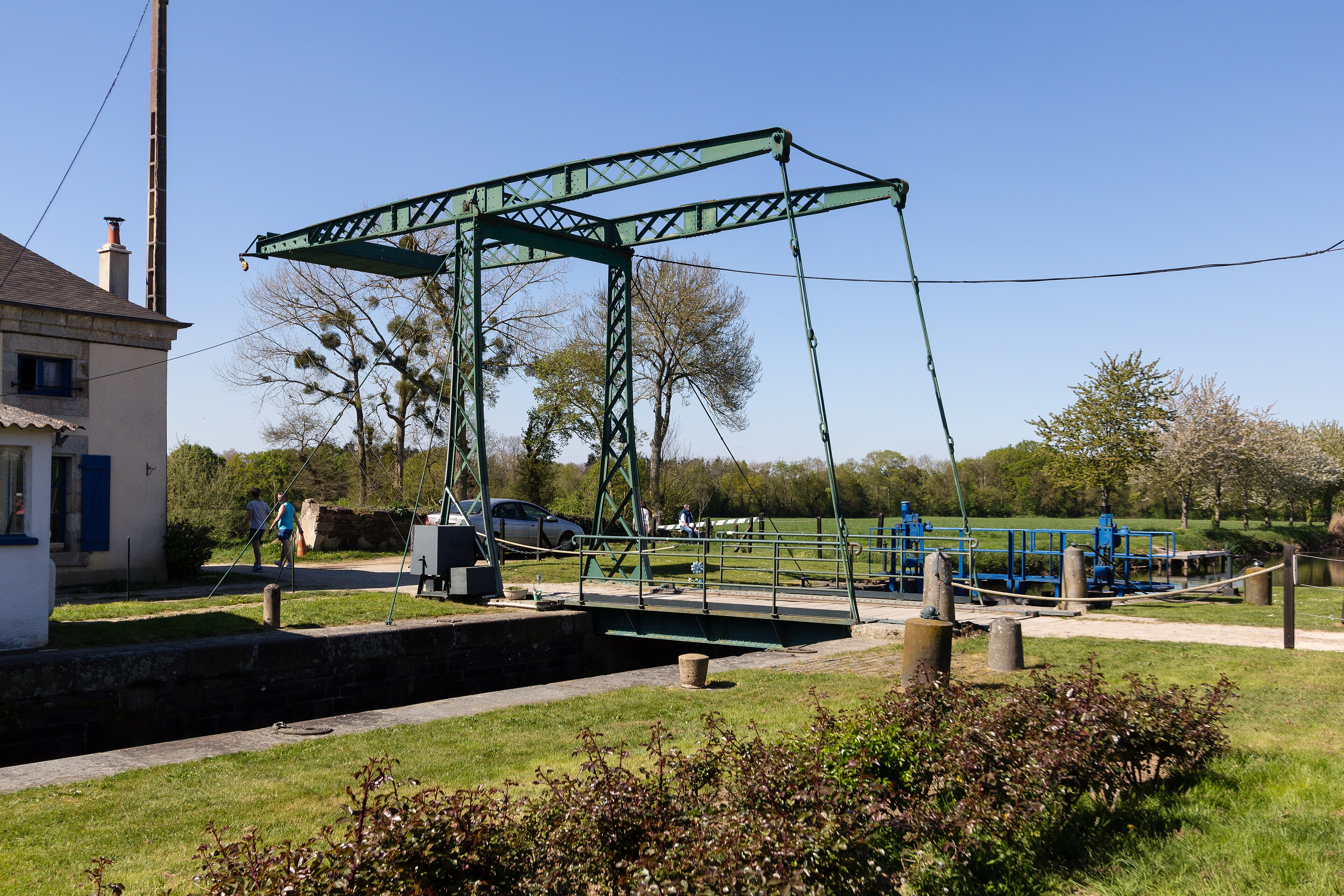
Granite house, blue shutters: Grey granite trim, slate roof and painted shutters strongly suggest Brittany in western France.
Concrete utility pole: A slim concrete pole with open, hollowed sides is typical of French power lines.
Green lift bridge: Small counterweighted bridge over a stone lock fits old French inland canals.
The house catches the eye first: rough grey granite framing the windows, a dark slate roof, and bright blue shutters. That combination is Brittany's calling card and rules out most of the Low Countries, where the same style of lift bridge would sit beside red brick. The tall concrete pole with hollowed sides confirms France, since this pole design shows up all over the French countryside. The lock and bridge point to one of Brittany's old canals, quiet towpaths lined with lock-keepers' cottages. Mistletoe clumps in the bare trees and lush green fields fit the mild, wet Atlantic climate. Carry this to other rounds: French concrete poles are a dependable country clue, even when the houses look generic.
Easily confused with
Netherlands: Dutch lift bridges sit beside brick houses, not grey granite ones.
Wales: Look for French concrete poles and colourful painted shutters.
Remember: Granite, slate roofs and blue shutters together usually mean Brittany.
 dropzone
 123