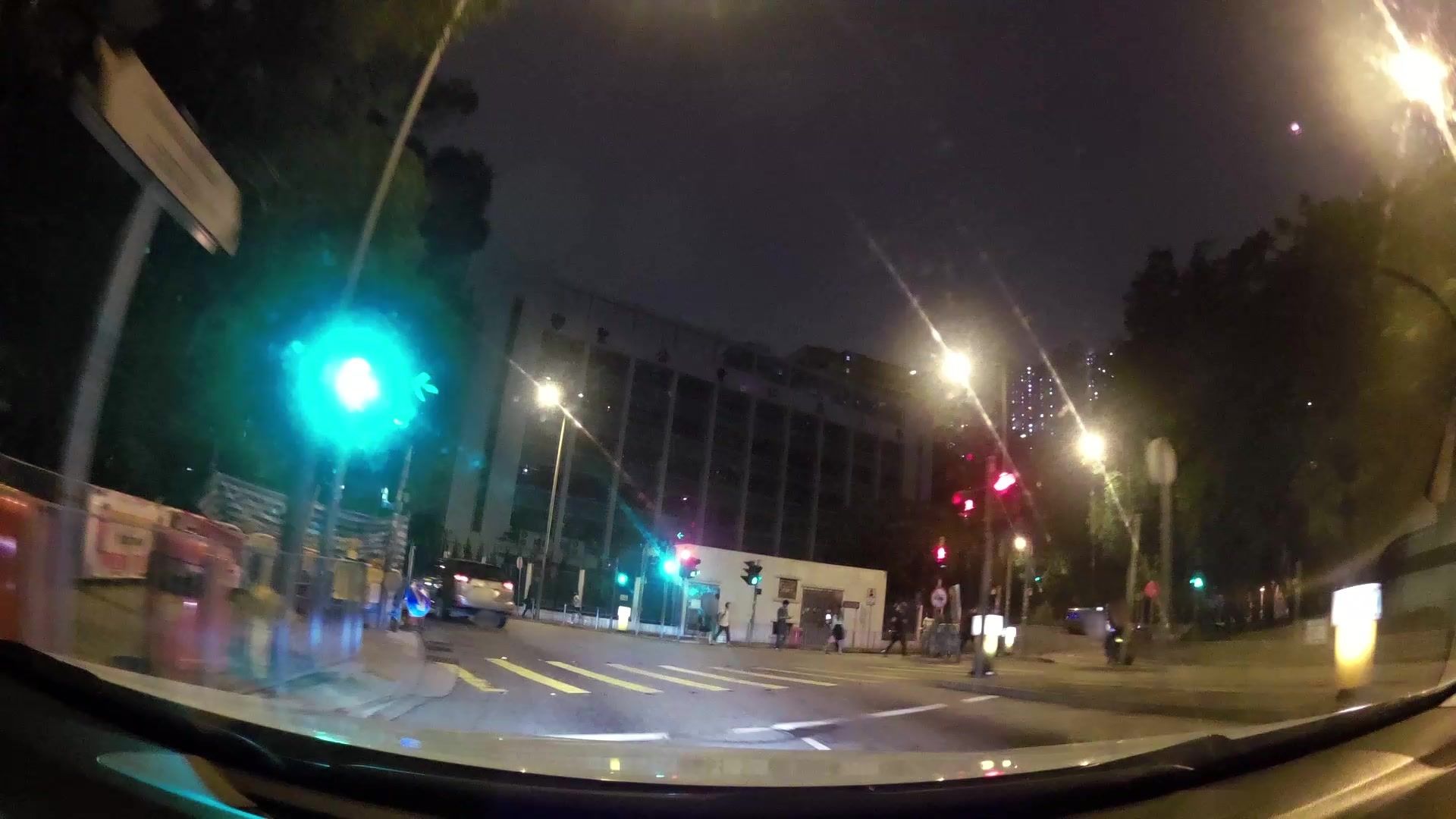
Tall lit housing towers: Very tall, densely lit residential blocks behind low buildings strongly suggest Hong Kong's New Territories.
Red-and-white roadside railings: Painted barrier fencing along the pavement edge is typical Hong Kong street furniture.
Subtropical trees, big junction: Dense evergreen trees around a wide signal-controlled junction fit humid southern China.
Even with heavy glare and darkness, the skyline gives this away: those slender, heavily lit towers in the distance are the kind of mass housing estates found across Hong Kong's New Territories. That alone rules out most of mainland China's smaller cities and narrows things to a few dense Asian places. The painted railings fencing pedestrians off from the road, the busy crossing and thick subtropical greenery all fit. A habit worth keeping for Hong Kong rounds: look for traffic on the left, railings along kerbs, and very tall towers rising behind trees, since the New Territories mix hillside woodland with huge estates.
Easily confused with
Shenzhen, mainland China: Hong Kong drives on the left; mainland China drives on the right.
Singapore: Singapore housing blocks are usually shorter and more colourfully painted.
Remember: Towering lit housing blocks behind leafy roads usually mean Hong Kong.
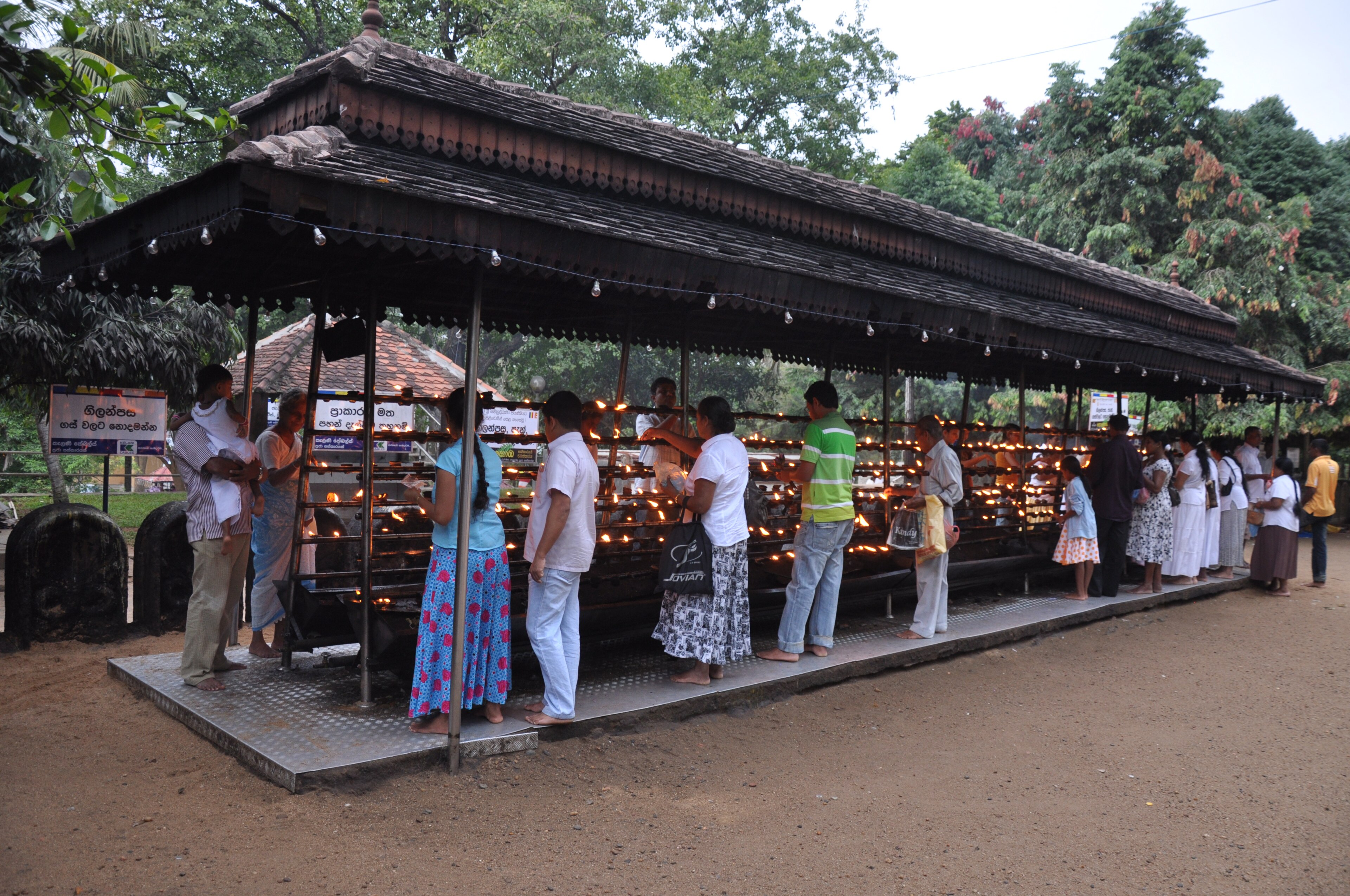
Sinhala script signs: Round, looping letters like curls are Sinhala, used only in Sri Lanka.
Buddhist oil lamp shed: Rows of oil lamps and barefoot worshippers in white suggest a Sri Lankan Buddhist temple.
Tropical trees, sandy ground: Lush wet-zone greenery fits Sri Lanka's humid southwest, around Colombo.
The first thing to grab is the script on the signs: those fat, rounded loops are Sinhala, and nothing else in the world looks quite like it, so the country is settled before you even look at the people. The barefoot crowd dressed in white, lighting rows of oil lamps, confirms a Buddhist temple visit, which fits the Sinhalese-majority south and west rather than the Tamil north and east. Dense, wet greenery points to the humid southwest, where Colombo and the Western Province sit. Carry this forward: in Sri Lanka, Sinhala signs lean southwest and centre, while Tamil script on signs nudges you toward Jaffna or the east coast.
Easily confused with
Thailand or Myanmar: Thai and Burmese scripts look different; Sinhala has big rounded loops.
Tamil Nadu, India: Tamil script is angular, and Hindu temples have colourful tower gateways.
Remember: Curly, loop-heavy script plus white-clad Buddhist worshippers means Sri Lanka.
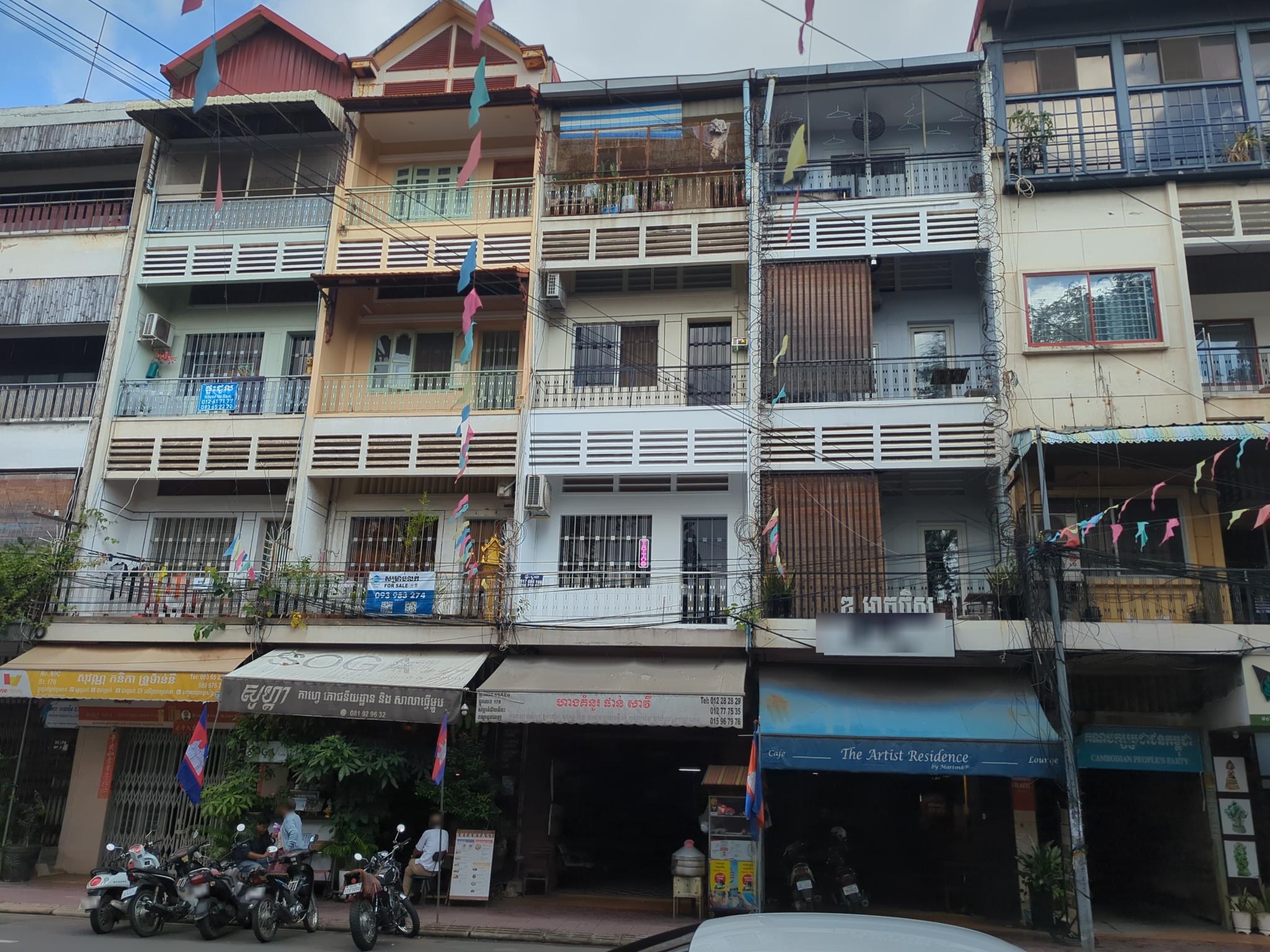
Cambodian flags on poles: Blue-red-blue flag with white Angkor Wat temple outline means Cambodia.
Khmer script on awnings: Rounded letters with small marks stacked below the line point to Cambodian Khmer.
Numbered street sign: "St. 178" style numbered streets are typical of central Phnom Penh.
The first thing that jumps out is the script on the awnings: round, curly letters with little marks tucked under the line. That is Khmer, which rules out Thailand's spikier writing and Vietnam's accented Latin letters. The flags on the poles, with a white temple in the middle, settle the country. Then look at the buildings: narrow concrete shophouses with slatted vents, balconies and wild tangles of cable, the classic Phnom Penh terrace. A small yellow sign reads St. 178. Phnom Penh names most streets by number, so a street number on a Cambodian shopfront is a strong hint you are in the capital. Also, Cambodians drive on the right, and the city is full of parked motorbikes.
Easily confused with
Bangkok, Thailand: Thai script is spikier with loops; Khmer stacks marks below letters.
Ho Chi Minh City, Vietnam: Vietnamese signs use Latin letters with accents, not a curly script.
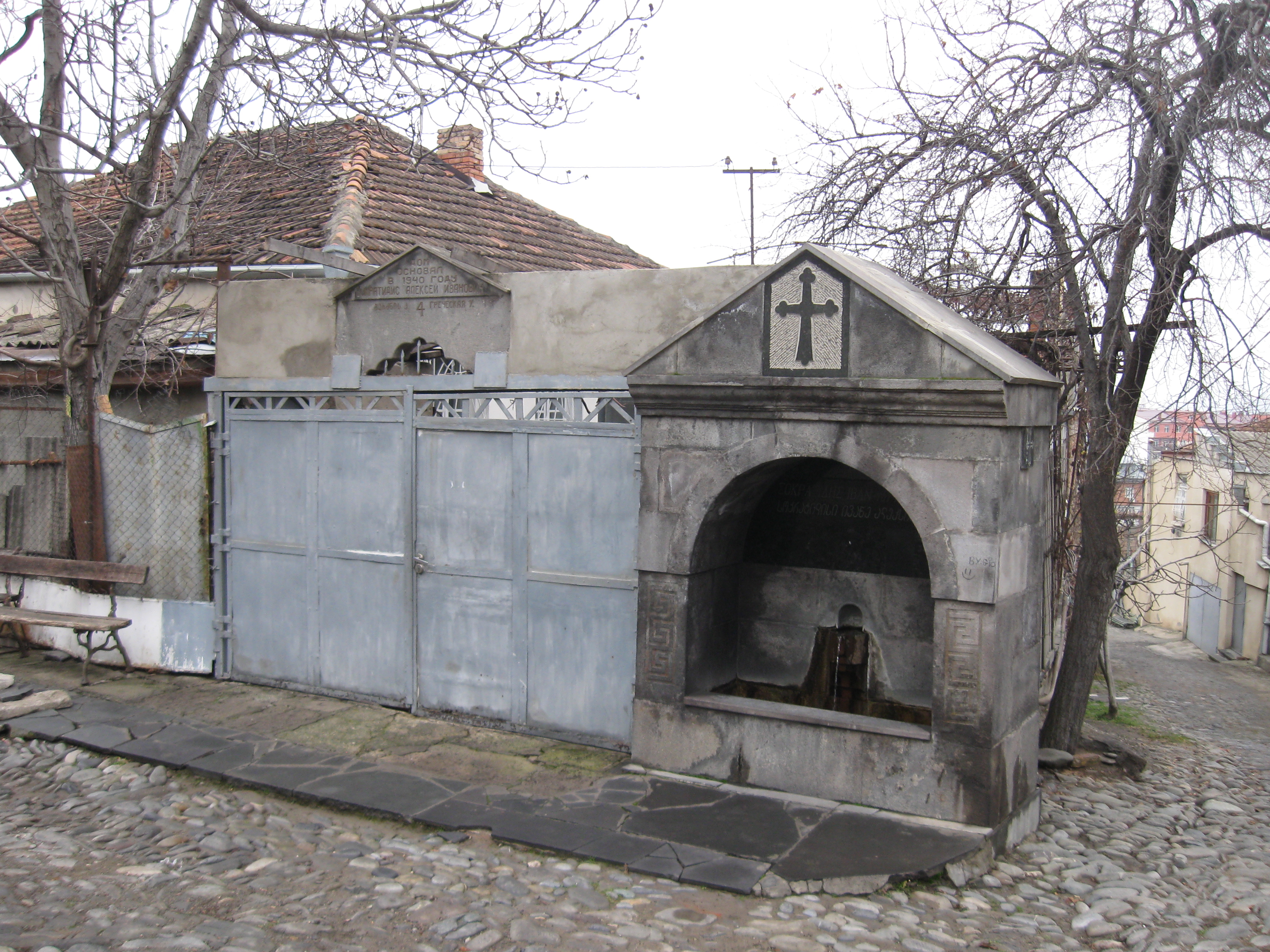
Georgian script inside arch: Round, looping letters with no capitals are unique to Georgia.
Russian plaque above gate: Cyrillic beside Georgian fits the former Soviet Caucasus, with Georgia as host country.
River-stone cobbles, clay tiles: Rounded cobbles and tiled roofs suggest an old Caucasus town on a hillside.
The first thing to hunt for is writing, and two kinds turn up: a Russian plaque over the gate and a line of curly script inside the fountain arch. That curly script is Georgian, which nobody else uses, so the country is settled right there. The Russian is a leftover from Soviet times and also shows up in Armenia and Azerbaijan, so don't lean on it alone. River-stone cobbles, a sagging clay-tile roof and a hillside lane all fit an old Georgian neighbourhood. With nothing pointing to a smaller town, Tbilisi is the best pin, since the capital holds about a third of the population. Carry this over: Georgian letters look like rounded loops and hooks sitting on a line, with no capital letters.
Easily confused with
Yerevan, Armenia: Armenian letters are hooked and angular; Georgian letters are round and bubbly.
Southern Russia: Russia rarely shows Georgian script; any Georgian letters mean Georgia.
Remember: Bubbly, rounded script with no capitals means Georgia, and Tbilisi is the safe pin.
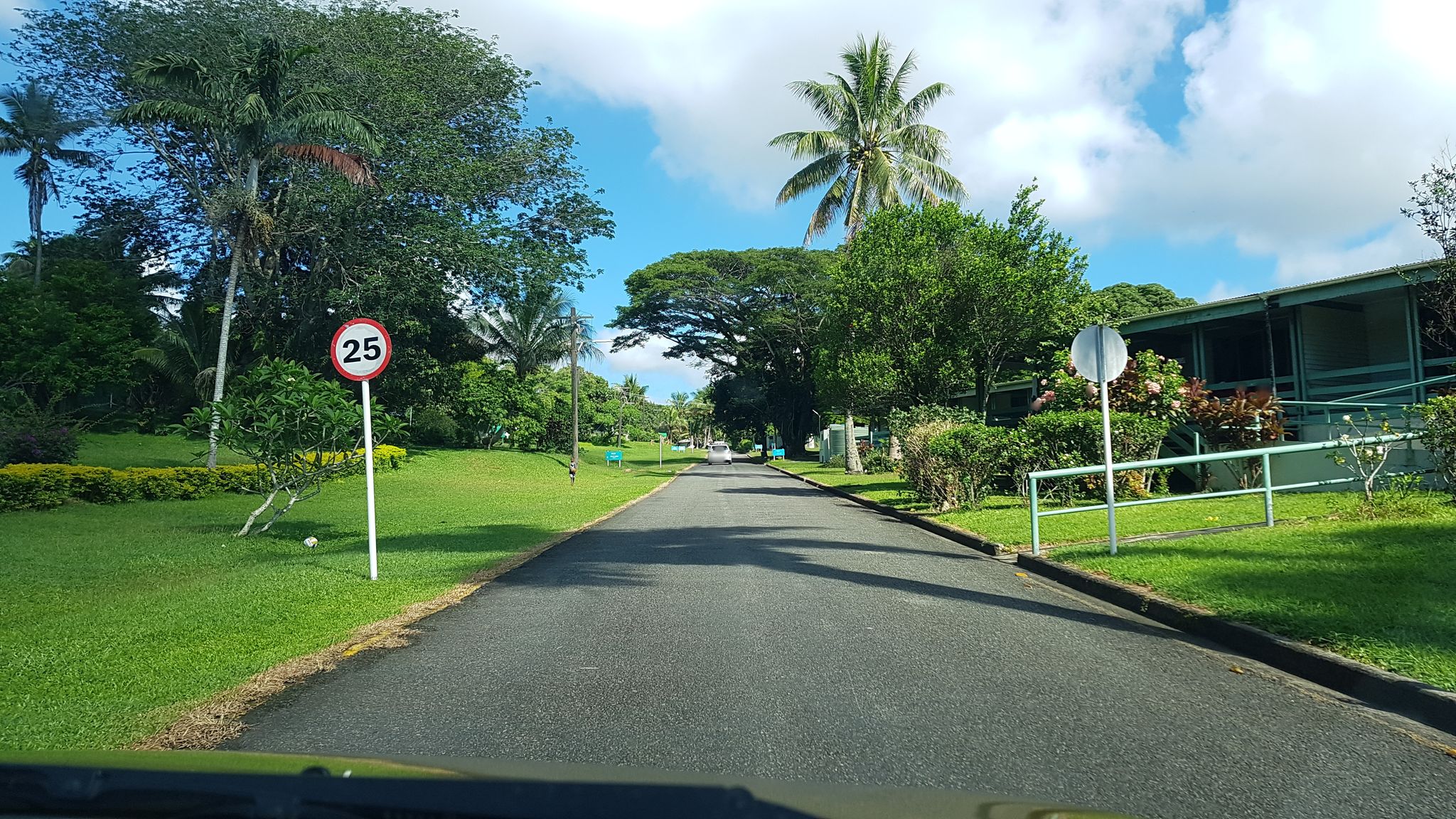
Coconut palms and rain trees: Lush coconut palms and big umbrella-shaped rain trees point to a wet tropical Pacific island.
Red-ringed 25 sign: A British-style round speed sign on a white pole fits Fiji's Commonwealth road signage.
Car on the left: The car ahead keeps left, so this is a left-driving country.
The first thing to notice is the plant life: coconut palms, frangipani and a huge spreading rain tree under a bright, humid sky, which places you firmly in the tropics. The car ahead is keeping left, which cuts out most of the tropical Americas, French Polynesia and New Caledonia. The round red-ringed speed sign on a plain white pole has a British feel, matching a former colony. The pale green timber building on stilts, with its railings, looks like a colonial-era government or school compound. Fiji's wetter eastern side, around Suva, is greener than the drier west near Nadi. A useful habit for other Pacific photos is to check the driving side first, then look for Commonwealth-style signage.
Easily confused with
Samoa: Samoa also drives left; Fiji has more Commonwealth-style signs and Indian influence.
French Polynesia: French Polynesia drives on the right with French-style signs.
Remember: Left driving plus coconut palms and round British signs: think Fiji first.
 dropzone
 12