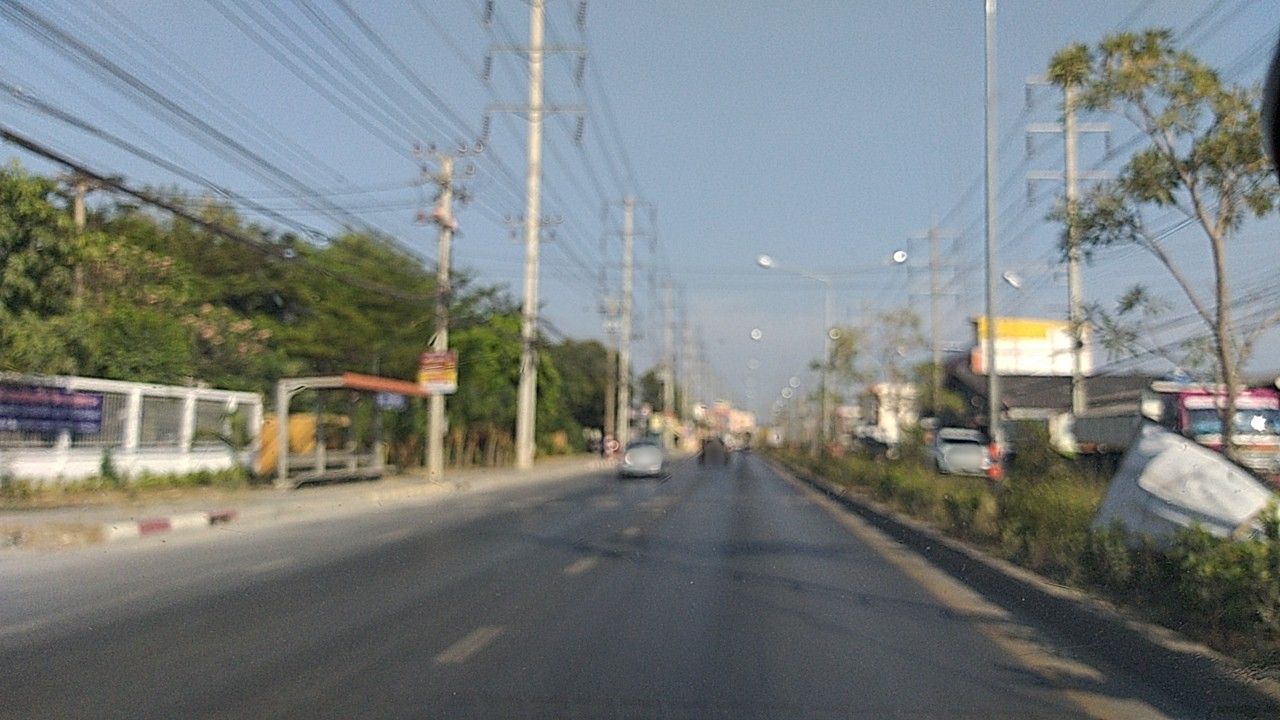
Red-and-white painted kerb: Red-white striped kerbs are a classic Thailand sign along roads and footpaths.
Concrete poles, tangled wires: Tall concrete poles carrying dense bundles of cables are typical of Thai suburbs.
Left-hand traffic, planted median: Driving on the left with a vegetated central strip fits Thailand's highways.
The blur hides any readable text, so lean on shapes and colours. The first giveaway is the red-and-white striped kerb on the left; few countries paint them this way, and Thailand does it everywhere. Traffic keeps left, which cuts out Cambodia, Laos and Vietnam next door. The forest of concrete poles and sagging cables, a gaudy painted truck on the right and a small roadside shelter with an orange roof all feel like the sprawl around Bangkok. Flat land, dusty light and a wide divided road fit the outer suburbs well. Carry this: in Southeast Asia, kerb paint colours are a fast filter even when signs are unreadable.
Easily confused with
Malaysia: Malaysian kerbs are usually black-and-white, not red-and-white.
Cambodia: Cambodia drives on the right; this traffic keeps left.
Remember: Red-white kerbs plus left-hand driving in the tropics means Thailand.
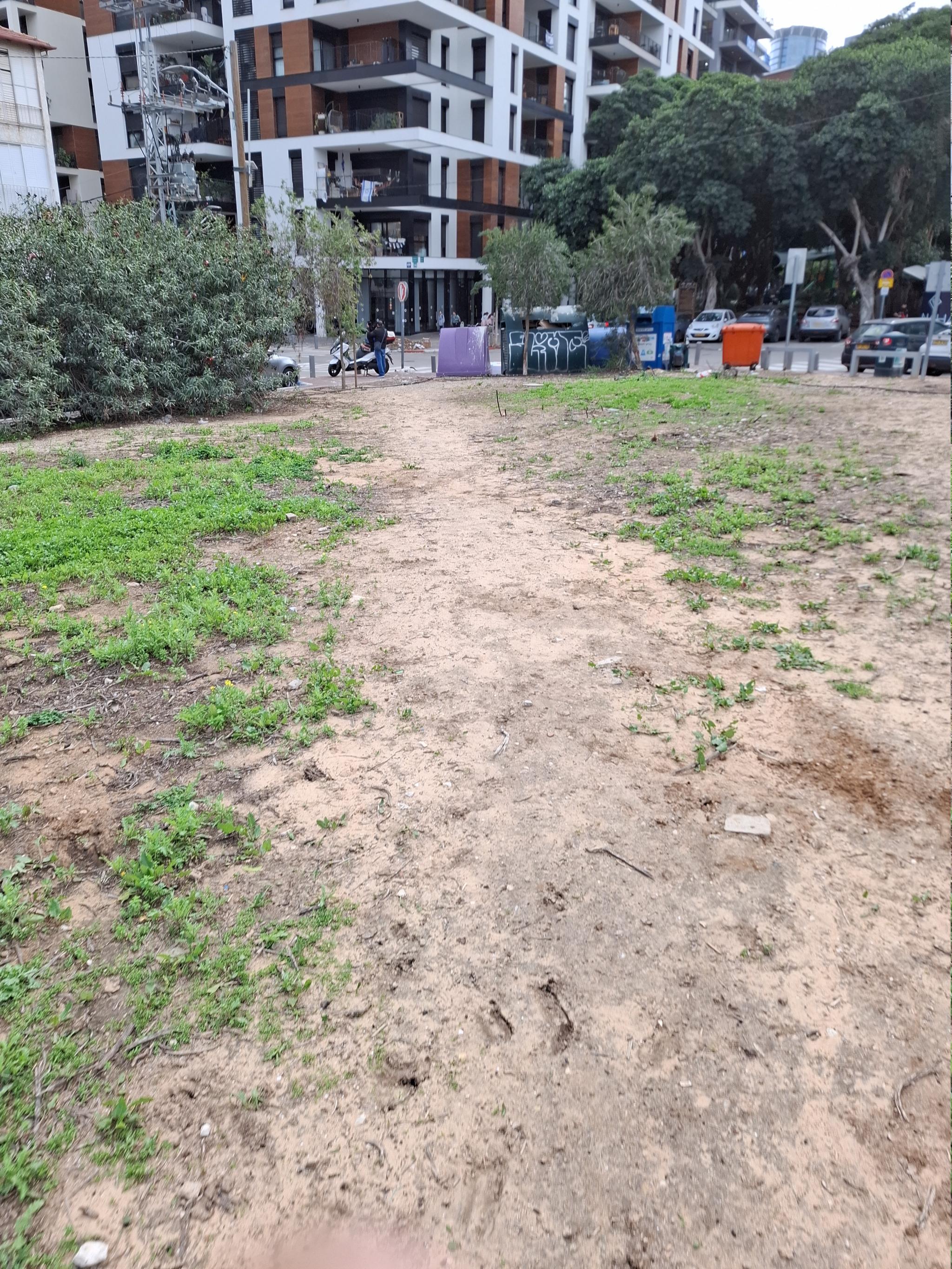
Flags on balconies: Blue-and-white Star of David flags hang from apartment balconies, pointing straight to Israel.
Yellow number plates: Long yellow rear plates on small cars match Israel's standard plate style.
Coloured recycling bins: Purple, orange and blue curbside bins are typical of Tel Aviv-area streets.
The bare sandy lot fills most of the frame, so look up at the street behind it. The first giveaway is the row of blue-and-white flags draped over balconies, common in Israel especially in recent years. Then check the parked cars: long yellow plates, which rules out most Mediterranean neighbours. White-and-wood apartment towers, big shady ficus trees, sandy coastal soil and a cluster of colourful recycling bins all fit the Tel Aviv metro area. A habit worth carrying to other Israel rounds: yellow plates are the fastest check, and the Netherlands and Luxembourg are the only common lookalikes, which look nothing like a dry Levant coast with sandy soil.
Easily confused with
Cyprus: Cypriot plates are white front and yellow rear but carry Greek-style lettering.
Lebanon: Lebanese streets show Arabic script and white-blue plates, not yellow plates.
Remember: Yellow plates plus white modern towers by the Mediterranean usually mean Israel.
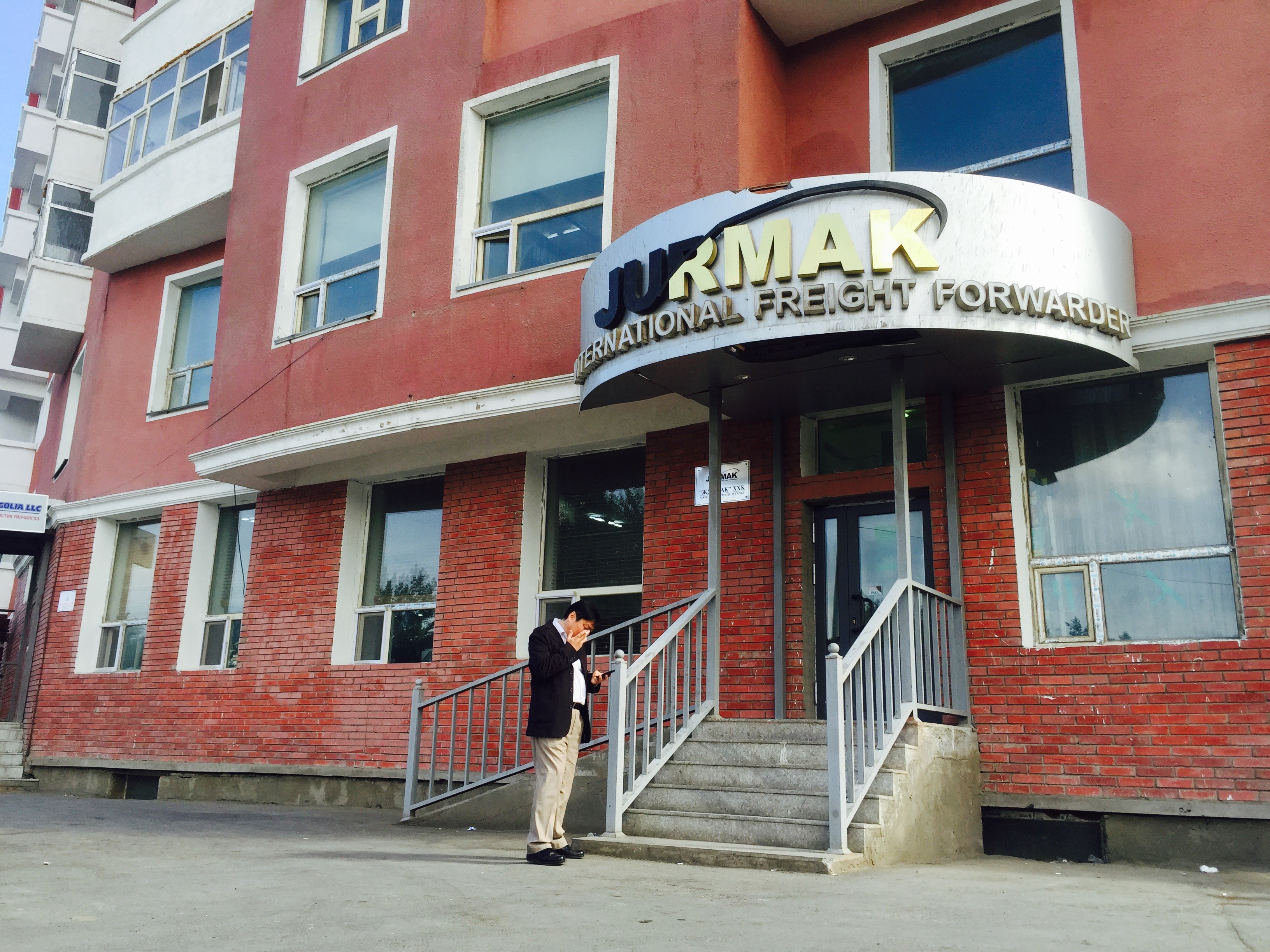
ХХК on the plaque: ХХК is the Mongolian abbreviation for LLC; Russia writes ООО instead.
Cut-off "...GOLIA LLC" sign: Almost certainly reads MONGOLIA LLC, beside Cyrillic text underneath.
Red blocks, white trim: Newer Chinese-built flats with plastic windows suit Ulaanbaatar's construction boom.
The first thing I'd notice is the Cyrillic on the small plaque by the door, which narrows things to the former Soviet world and Mongolia. The abbreviation ХХК settles it, because only Mongolian companies use it. The cut-off English sign on the left almost spells out the country, and the man's features fit East Asia rather than Russia. The buildings help too: dusty red render, white window frames and plastic windows match the blocks that went up during Ulaanbaatar's recent building boom. Something to carry to other rounds is that Ulaanbaatar holds about half of Mongolia's people. So any city-looking Mongolian photo deserves a pin right in the capital.
Easily confused with
Kazakhstan or Russia: Look for ХХК; Kazakhstan uses ТОО and Russia uses ООО.
Inner Mongolia, China: China shows Chinese characters and vertical Mongolian script, not Cyrillic.
Remember: Cyrillic plus ХХК means Mongolia; most Mongolian city photos are Ulaanbaatar.
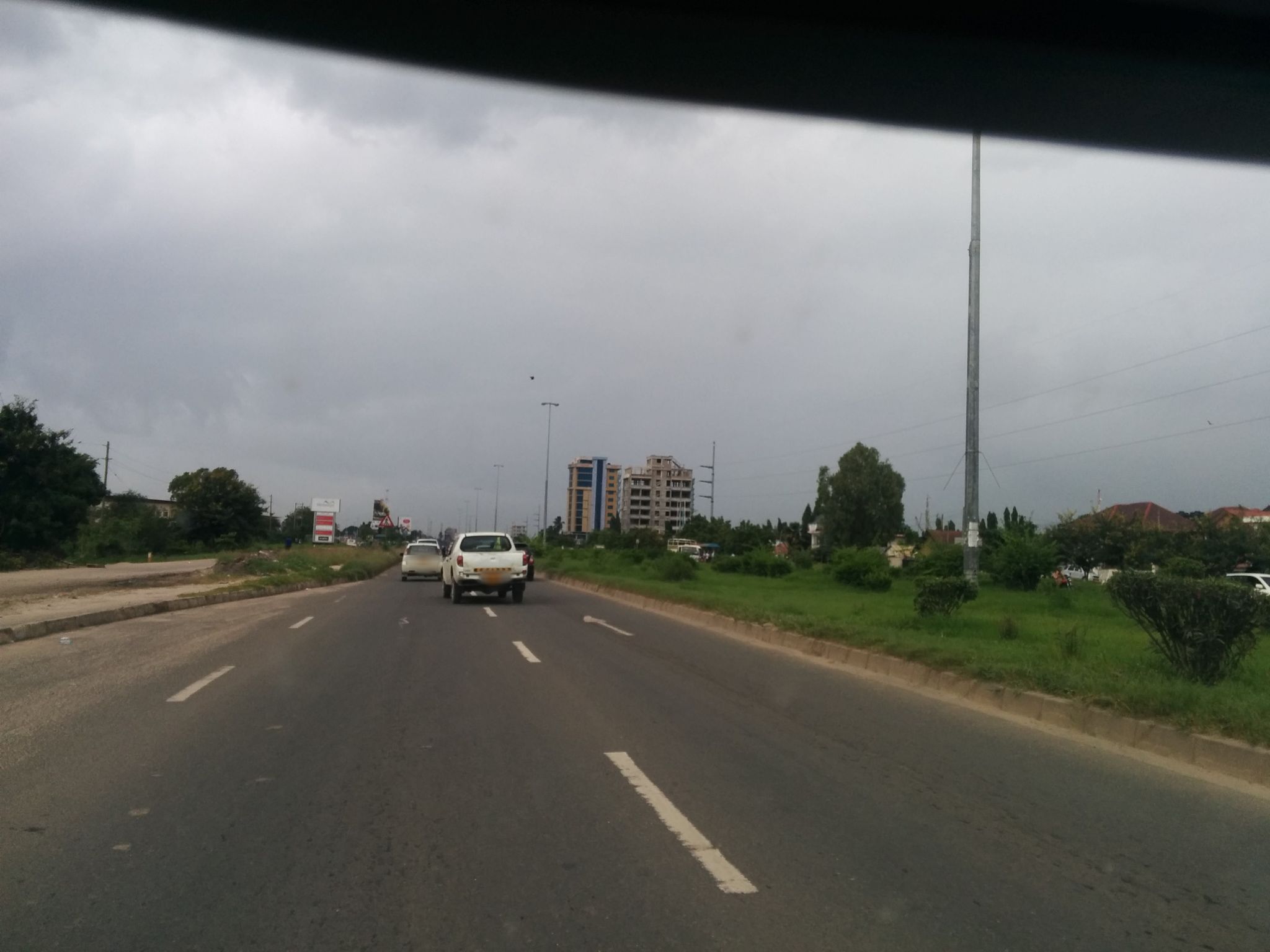
Left-hand traffic: Cars keep left with the median on the right, pointing to former British East Africa.
Yellowish rear number plate: Yellow rear plates on left-driving roads suggest Tanzania, Kenya or Uganda.
Lush lowland greenery, mid-rise towers: Humid green verges and new concrete apartment blocks fit coastal Dar es Salaam sprawl.
The first thing to clock is the traffic on the left and the median on the right, which narrows things to former British territories. In Africa that plus a yellowish rear plate on the pickup points squarely at East Africa: Tanzania, Kenya or Uganda. The very green, flat land under heavy rain clouds suggests humid lowland rather than highland Nairobi or Kampala, and the clusters of new mid-rise concrete apartment towers rising out of low red-roofed housing are typical of Dar es Salaam's spreading suburbs. A habit worth carrying: Tanzanian roads use plain white markings with simple concrete kerbs, while Kenya frequently adds yellow edge lines, so check road paint before committing.
Easily confused with
Kenya: Kenyan roads often have yellow edge lines; Tanzania sticks to white.
Mozambique: Mozambique's rear plates are white, not yellow.
Remember: Left driving plus yellow rear plates means East Africa; humid green means coast.
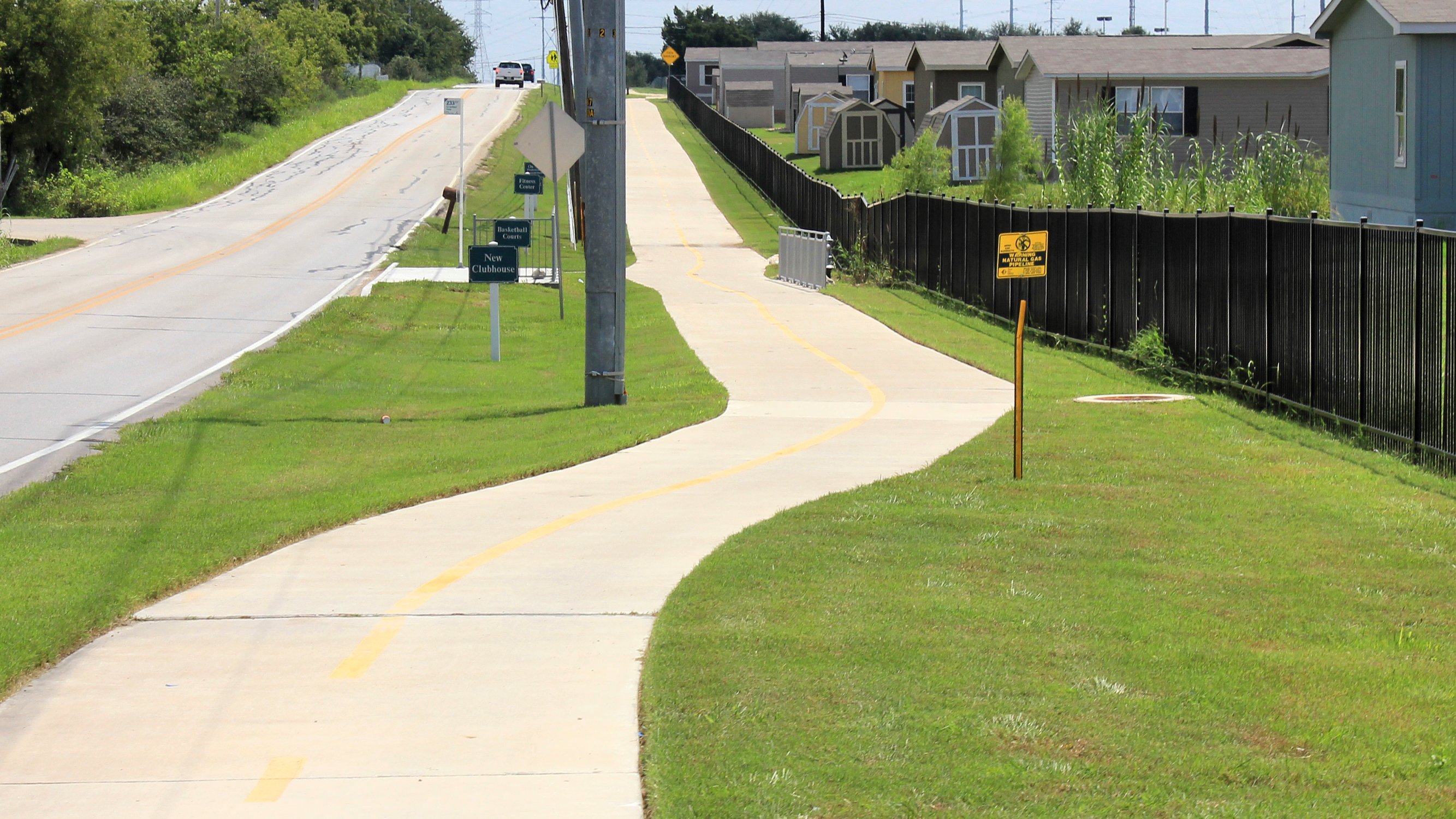
Yellow centre line: Double yellow centre line with white edges marks North America, almost certainly the US.
Pipeline warning sign: English 'Natural Gas Pipeline' marker suggests US oil-and-gas country like Texas or Oklahoma.
Manufactured homes, flat land: Rows of mobile homes and sheds on flat, humid green land fit the southern US.
The yellow centre line jumps out first, which narrows things to North America and rules out Europe, Australia and most of the world. English signs, a diamond-shaped warning sign and a wooden mailbox post settle it as the US. Then you pick the region: very flat ground, thick green grass in summer heat, high-voltage pylons and a park of manufactured homes suggest the southern plains rather than New England or the mountain West. The yellow gas pipeline marker is a nice nudge toward energy states like Texas or Oklahoma. A useful habit for US rounds: once the country is certain, use terrain, vegetation and sprawl style to choose the region, and start Texas guesses near the big metros where most photos are taken.
Easily confused with
Canada: Canada's signs often add French or metric; this flat, hot southern scene doesn't fit.
Australia: Australia drives on the left and uses white centre lines, not yellow.
Remember: Yellow centre line plus English signs: think US, then judge region by land.
 dropzone
 12